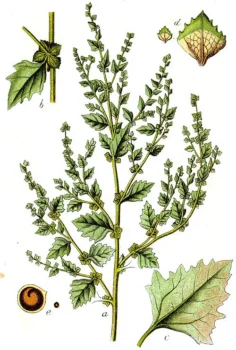
Tumbling Saltweed: A Hardy Annual for Challenging Garden Spots
If you’ve ever wondered about that resilient little plant that seems to thrive where nothing else will grow, you might be looking at tumbling saltweed (Atriplex rosea). This scrappy annual has made itself at home across North America, though it originally hails from much farther away.
What Is Tumbling Saltweed?
Tumbling saltweed is a non-native annual plant that has established itself throughout Canada and the United States. Originally from Europe and Asia, this hardy species has proven remarkably adaptable to North American conditions, reproducing spontaneously in the wild without human intervention.
As its name suggests, this plant has a unique relationship with salt – it’s incredibly tolerant of salty soils that would stress or kill many other plants. This makes it particularly interesting for gardeners dealing with challenging growing conditions.
Where You’ll Find It Growing
Tumbling saltweed has an impressively wide distribution across North America. You can find it growing in Alberta, Alabama, British Columbia, Arizona, California, Nova Scotia, Ontario, Colorado, Saskatchewan, Florida, Idaho, Illinois, Indiana, Iowa, Kansas, Maryland, Massachusetts, Michigan, Missouri, Montana, Nebraska, Nevada, New Jersey, New Mexico, New York, North Dakota, Ohio, Oregon, Pennsylvania, Rhode Island, South Carolina, South Dakota, Texas, Utah, Virginia, Washington, Wisconsin, and Wyoming.
- Species observed
- No observations
What Does It Look Like?
This annual plant typically grows 1-3 feet tall and spreads about 1-2 feet wide. While it may not win any beauty contests, tumbling saltweed has its own understated charm:
- Small, greenish flowers that are wind-pollinated
- Reddish stems that can provide interesting color contrast
- Foliage that may develop attractive reddish tones, especially in fall
- A somewhat sprawling, informal growth habit
Growing Conditions and Care
One of tumbling saltweed’s greatest strengths is its ability to thrive in conditions that challenge other plants. Here’s what it prefers:
- Sun: Full sun exposure
- Soil: Poor to moderate soils; actually prefers less fertile conditions
- Water: Extremely drought tolerant once established
- Salt tolerance: Exceptional – perfect for roadside or coastal areas
- Hardiness: Suitable for USDA zones 3-9
Wetland Characteristics
Across all regions of North America, tumbling saltweed is classified as Facultative Upland, meaning it usually grows in non-wetland areas but can occasionally be found in wetland edges. This makes it primarily a dry-land species that’s well-suited to upland garden areas.
Should You Plant Tumbling Saltweed?
The decision to include tumbling saltweed in your garden depends on your specific needs and philosophy about native plants. Here are some considerations:
Potential Benefits:
- Excellent for stabilizing disturbed or poor soils
- Virtually maintenance-free once established
- Thrives in challenging conditions where other plants struggle
- Fast-growing annual that fills spaces quickly
- Good choice for xerophytic (dry) gardens
Things to Consider:
- Limited wildlife and pollinator value compared to native alternatives
- Can self-seed readily, though not considered invasive
- May not fit the aesthetic of formal garden designs
Native Alternatives to Consider
If you’re interested in the benefits that tumbling saltweed offers but prefer to support native ecosystems, consider these alternatives:
- Native Atriplex species in your region
- Native grasses adapted to dry conditions
- Regional wildflowers that tolerate poor soils
- Native groundcovers suitable for difficult sites
The Bottom Line
Tumbling saltweed isn’t going to be the star of your garden, but it can serve a valuable role in challenging locations where you need something tough and reliable. While it’s not native to North America, it’s also not considered problematic in most areas. If you decide to grow it, you’ll find it’s refreshingly low-maintenance – sometimes the best plants are the ones that simply take care of themselves.
Whether you choose tumbling saltweed or opt for native alternatives, the key is selecting plants that match both your site conditions and your gardening goals. Sometimes the most successful gardens are built on understanding what thrives naturally in your specific environment.