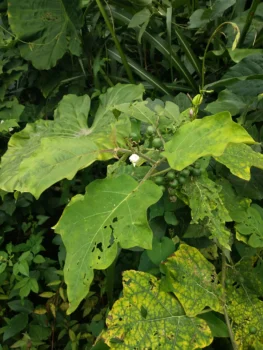
Turkey Berry: Why This Thorny Shrub Should Stay Out of Your Garden
If you’ve encountered turkey berry (Solanum torvum) growing wild in warmer parts of the United States, you might be tempted by its pretty white flowers and colorful berries. But before you consider adding this perennial shrub to your landscape, there are some important things you should know about this non-native plant.
What is Turkey Berry?
Turkey berry, scientifically known as Solanum torvum, is a robust perennial shrub that can reach heights of 13-16 feet under ideal conditions. This multi-stemmed woody plant produces small, star-shaped white flowers followed by clusters of small green berries that turn yellow when ripe. While it might look appealing, don’t let its innocent appearance fool you.
Originally native to the Caribbean and parts of Central and South America, turkey berry has established itself far from home. You’ll also find it listed under the synonym Solanum ficifolium in some older botanical references.
Where Turkey Berry Grows
This adaptable shrub has made itself at home across several U.S. states and territories, including Alabama, Florida, Hawaii, Maryland, as well as Guam, Palau, Puerto Rico, and the U.S. Virgin Islands. It reproduces spontaneously in the wild without any human help and tends to persist wherever it establishes.
- Species observed
- No observations
Why You Should Think Twice Before Planting Turkey Berry
Here’s the big red flag: Turkey berry is classified as a noxious weed in the United States. This official designation means it’s considered harmful to agriculture, horticulture, or natural habitats. When a plant earns this label, it’s nature’s way of saying proceed with extreme caution.
The shrub’s aggressive growing habits and ability to spread quickly make it problematic for both gardeners and natural ecosystems. Its thorny stems can create impenetrable thickets, and once established, it can be difficult to remove.
Growing Conditions and Characteristics
Turkey berry is remarkably adaptable, which partly explains its success as an introduced species. Here’s what you should know about its preferences:
- Hardiness: Thrives in USDA zones 9-11
- Sunlight: Prefers full sun but tolerates partial shade
- Soil: Adapts to various soil types
- Water: Drought tolerant once established
- Wetland status: Usually found in non-wetland areas but can occasionally grow in wetland conditions
The plant’s white flowers do provide some benefit to pollinators like bees, but this small positive is vastly outweighed by its problematic nature.
Better Alternatives for Your Garden
Instead of risking the introduction of turkey berry to your landscape, consider these native alternatives that offer similar benefits without the ecological concerns:
- For flowering shrubs: Look for native Viburnum species or elderberry (Sambucus canadensis)
- For wildlife food: Consider native berry-producing plants like beautyberry (Callicarpa americana) in the Southeast
- For pollinator gardens: Native salvias, penstemons, or regional wildflowers provide excellent pollinator support
The Bottom Line
While turkey berry might seem like an interesting addition to your garden, its classification as a noxious weed should give any responsible gardener pause. Its aggressive growth habits and potential to disrupt local ecosystems make it a plant that’s better appreciated from a distance – if at all.
Your garden will be healthier, your neighbors will thank you, and local wildlife will benefit more from native plant choices that provide beauty without the ecological baggage. When it comes to turkey berry, the best gardening advice is simple: just say no.