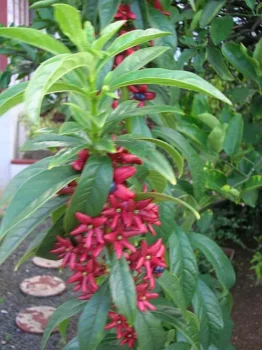
Turk’s Turban: The Exotic Flowering Shrub That’s Turning Heads in Southern Gardens
If you’ve ever spotted a shrub with peculiar white flowers that look like tiny turbans complete with flowing ribbons, you’ve likely encountered Clerodendrum indicum, better known as turk’s turban. This eye-catching flowering shrub has been making its way into Southern gardens, bringing a touch of tropical flair with its distinctive blooms and fragrant flowers.
What Is Turk’s Turban?
Turk’s turban (Clerodendrum indicum) is a perennial shrub that typically grows as a multi-stemmed woody plant reaching 4 to 5 meters in height, though it can sometimes grow taller or develop a single stem depending on growing conditions. The plant gets its charming common name from its unique flowers, which feature white tubular blooms with long, protruding stamens that create the appearance of a small turban with flowing plumes.
Native Status and Distribution
It’s important to know that turk’s turban is not native to North America. Originally from tropical Asia, this plant has been introduced and now reproduces spontaneously in the wild across several states including Florida, Georgia, Hawaii, Louisiana, Mississippi, South Carolina, Texas, and the U.S. Virgin Islands. While it has established itself in these areas, it’s not currently listed as invasive or noxious.
- Species observed
- No observations
Why Gardeners Choose Turk’s Turban
Despite its non-native status, turk’s turban offers several appealing qualities that attract gardeners:
- Unique flowers: The distinctive turban-shaped blooms are conversation starters and add exotic appeal to any garden
- Fragrant blooms: The flowers emit a pleasant fragrance, especially in the evening
- Pollinator attraction: Butterflies and other pollinators are drawn to the nectar-rich flowers
- Year-round interest: As a perennial shrub, it provides structure and greenery throughout the growing season
Growing Conditions and Care
Turk’s turban thrives in USDA hardiness zones 9-11, making it suitable for tropical and subtropical gardens. In cooler regions, it can be grown as an annual or in containers that can be moved indoors during winter.
Preferred growing conditions include:
- Partial shade to full sun exposure
- Well-draining, fertile soil
- Regular watering, especially during the growing season
- Warm temperatures and protection from frost
Planting and Care Tips
Successfully growing turk’s turban requires attention to a few key care practices:
- Watering: Maintain consistent moisture during the growing season, but avoid waterlogged conditions
- Fertilizing: Feed with a balanced fertilizer during active growth periods
- Pruning: Prune after flowering to maintain shape and encourage bushier growth
- Winter protection: In zones 9-10, provide protection from frost or grow in containers that can be moved indoors
Consider Native Alternatives
While turk’s turban can be an attractive addition to warm-climate gardens, consider supporting local ecosystems by incorporating native alternatives alongside or instead of non-native species. Some native options that offer similar ornamental value include:
- Native flowering shrubs suited to your specific region
- Indigenous plants that support local wildlife and pollinators
- Native species that require less water and maintenance once established
The Bottom Line
Turk’s turban can be a delightful addition to gardens in zones 9-11, offering unique flowers and fragrance that many gardeners find irresistible. While it’s not native to North America, it’s not currently considered invasive. If you choose to grow it, practice responsible gardening by preventing its spread beyond your garden and consider balancing your landscape with native plants that support local wildlife. Whether you’re drawn to its quirky flowers or exotic appeal, turk’s turban can certainly add a conversation piece to your garden collection.