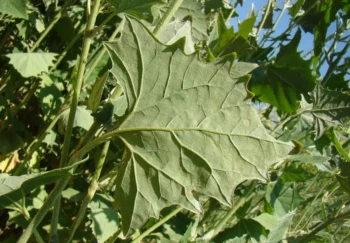
Twoscale Saltbush: An Introduced Annual You’ll Want to Know About
Meet twoscale saltbush (Atriplex micrantha), a small but widespread annual that has quietly made itself at home across much of North America. While you might not rush out to plant this unassuming little herb in your garden, understanding what it is and where it grows can help you become a more informed steward of your local landscape.
What Exactly Is Twoscale Saltbush?
Twoscale saltbush is an annual plant that belongs to the goosefoot family. Originally from Eurasia, this hardy little survivor has established itself across a remarkable range of North American landscapes. You might also see it referred to by its scientific name, Atriplex micrantha, or its botanical synonym, Atriplex heterosperma.
True to its saltbush heritage, this plant sports the characteristic silvery-gray foliage that helps it cope with challenging growing conditions. Don’t expect showy flowers – this species keeps things simple with small, inconspicuous blooms that rely on wind for pollination.
Where You’ll Find It Growing
This adaptable annual has spread far and wide since its introduction to North America. You can find twoscale saltbush growing in an impressive list of locations, including Alberta, British Columbia, Manitoba, Ontario, Quebec, California, Colorado, Idaho, Minnesota, Missouri, Montana, Nebraska, Nevada, New Mexico, North Dakota, Oregon, South Dakota, Utah, Washington, and Wyoming.
- Species observed
- No observations
What’s particularly interesting about this plant is its ability to thrive in disturbed soils and areas where other plants struggle. You’re most likely to spot it in places like roadsides, vacant lots, agricultural edges, and other areas that have been altered by human activity.
Should You Plant Twoscale Saltbush?
Here’s where things get interesting. While twoscale saltbush isn’t necessarily harmful, it’s also not the most exciting choice for your garden. As a non-native species that’s already well-established in the wild, there are compelling reasons to consider native alternatives instead.
This plant offers minimal benefits to pollinators since it’s wind-pollinated, and its wildlife value is limited compared to native species that have co-evolved with local ecosystems. Plus, let’s be honest – its aesthetic appeal is pretty modest.
Native Alternatives Worth Considering
If you’re drawn to the idea of salt-tolerant, drought-resistant plants, consider these native alternatives:
- Four o’clock saltbush (Atriplex elegans) – if you’re in the western regions
- Native Atriplex species specific to your area
- Other native plants adapted to saline or disturbed soils in your region
Growing Conditions and Characteristics
Should you encounter twoscale saltbush in the wild, you’ll typically find it in:
- Saline or alkaline soils
- Dry, disturbed areas
- Sites with poor soil conditions
- Areas with minimal competition from other plants
As an annual, it completes its entire life cycle in one growing season, producing seeds that allow it to return the following year. Its ability to tolerate harsh conditions makes it a persistent presence in suitable habitats.
The Bottom Line
While twoscale saltbush isn’t causing major ecological disruption, it’s not adding much value to our landscapes either. If you’re planning a garden or landscape project, you’ll get much more bang for your buck – and provide greater benefits to local wildlife – by choosing native species instead.
Think of twoscale saltbush as one of those plants that’s simply part of the landscape now, neither hero nor villain, just quietly doing its thing in disturbed soils across the continent. Understanding what it is helps you make better choices about what you actually want to invite into your garden space.