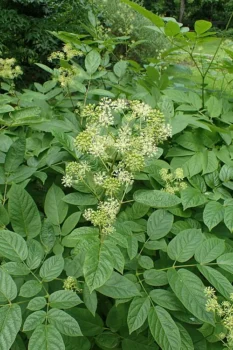
Growing Udo (Aralia cordata): A Bold Statement Plant for Shade Gardens
If you’re looking for a plant that makes a dramatic statement in your shade garden, udo might just be your new best friend. This impressive perennial brings an almost tropical flair to cooler climates, with its massive leaves and towering presence that can transform any boring corner into something spectacular.
What Exactly Is Udo?
Udo (Aralia cordata) is a herbaceous perennial that’s native to Japan, Korea, China, and eastern Russia. You might also see it listed under its synonym Aralia edulis. This plant is like the gentle giant of the shade garden – it can reach impressive heights of 6-10 feet tall and spread 4-6 feet wide, but it does so with an elegant, architectural grace that never feels overwhelming.
What makes udo truly special is its bold, compound leaves that can be up to 3 feet long. These leaves give the plant an almost prehistoric look that’s absolutely stunning when backlit by dappled sunlight filtering through tree canopy.
Why You Might Want to Grow Udo
Here’s what makes udo such a compelling choice for adventurous gardeners:
- Dramatic foliage: Those massive, tropical-looking leaves create incredible texture and visual impact
- Seasonal interest: White, frothy flower clusters appear in mid to late summer, followed by dark purple berries
- Pollinator magnet: The flowers attract bees, flies, and other beneficial insects
- Low maintenance: Once established, it’s fairly hands-off
- Deer resistant: Most deer tend to leave it alone
Perfect Garden Situations for Udo
Udo thrives in woodland gardens and naturalized shade areas where it can spread and create colonies over time. It’s perfect for:
- Asian-inspired garden designs
- Woodland gardens and shade borders
- Areas where you want to create a tropical feel in a temperate climate
- Background plantings where height and texture are needed
- Wildlife gardens focused on pollinator support
Growing Conditions and Care
The good news is that udo isn’t particularly fussy once you understand its basic needs. This plant is hardy in USDA zones 4-8, making it suitable for a wide range of climates.
Light requirements: Udo prefers partial to full shade. It can handle some morning sun, but afternoon shade is essential, especially in warmer climates.
Soil needs: Rich, moist, well-draining soil with plenty of organic matter is ideal. Think forest floor conditions – that’s what makes this plant happiest.
Water requirements: Consistent moisture is key, but avoid waterlogged conditions. Mulching helps retain moisture and suppress weeds.
Planting and Care Tips
Spring is the best time to plant udo. Here are some tips for success:
- Dig a hole twice as wide as the root ball and amend the soil with compost
- Plant at the same depth it was growing in the container
- Apply a 3-inch layer of organic mulch around the plant
- Water regularly during the first growing season to establish roots
- In fall, the plant will die back completely – this is normal!
- Mark the location so you don’t accidentally dig it up in spring
A Word About Native Alternatives
While udo isn’t native to North America, it’s not considered invasive either. However, if you’re focused on native plants, consider these alternatives that offer similar bold foliage and architectural presence:
- Wild ginger (Asarum canadense): Lower growing but with beautiful heart-shaped leaves
- Wild columbine (Aquilegia canadensis): Offers delicate flowers and interesting foliage
- Native ferns: Various species provide lush, architectural foliage
Is Udo Right for Your Garden?
Udo is perfect for gardeners who want to make a bold statement in their shade gardens and aren’t afraid of plants with personality. It’s ideal if you have the space for a large perennial and want something that looks exotic but can handle cold winters.
However, udo might not be the best choice if you have a small garden, prefer neat and tidy plants, or live in an area prone to drought. Remember, this plant completely disappears in winter, so you’ll want other plants to provide structure during the cold months.
With its dramatic foliage, pollinator-friendly flowers, and relatively easy care requirements, udo can be a fantastic addition to the right garden. Just give it the shade and moisture it craves, and you’ll be rewarded with one of the most architecturally striking plants you can grow in a temperate climate.