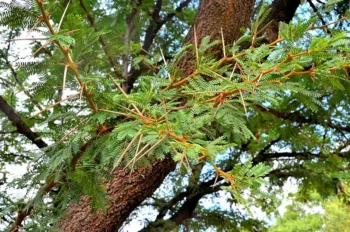
Vachellia robusta: The Majestic African Thorn Tree for Warm Climate Gardens
If you’re looking for a dramatic statement tree that can handle blazing sun and minimal water, Vachellia robusta might just catch your eye. This impressive African native, formerly known as Acacia robusta, brings a touch of the savanna to suitable climates with its distinctive umbrella-shaped canopy and cheerful yellow blooms.
What Makes Vachellia robusta Special?
Vachellia robusta is a large deciduous tree that commands attention in any landscape. Its feathery, compound leaves create delicate-looking foliage that belies the tree’s incredible toughness. Come flowering season, the tree erupts in spherical clusters of bright yellow flowers that practically glow against the green backdrop.
The tree’s most striking feature is its mature form – a classic umbrella or flat-topped canopy that’s instantly recognizable and undeniably elegant. At full size, it can reach 40-60 feet tall with an equally impressive spread, making it a true giant that needs plenty of room to shine.
Where Does This Tree Come From?
Vachellia robusta hails from the warm regions of southern Africa, including South Africa, Botswana, and Zimbabwe. In its native habitat, it’s a cornerstone species of the landscape, providing shade and resources for wildlife in often harsh, dry conditions.
Should You Plant Vachellia robusta?
The answer depends on your location, garden size, and goals. This tree thrives in USDA hardiness zones 9-11, so if you live anywhere that gets regular hard freezes, it’s simply not going to work for you. Even in suitable zones, young trees need protection from frost.
Consider planting it if you:
- Live in a warm, dry climate (zones 9-11)
- Have a large property with plenty of space
- Want a drought-tolerant specimen tree
- Appreciate unique, architectural plant forms
- Are creating a xeriscape or water-wise garden
Skip it if you:
- Live in zones 8 or below
- Have a small yard (this tree gets massive!)
- Prefer low-maintenance trees without thorns
- Want to focus exclusively on native plants
Native Alternatives to Consider
If you love the idea of Vachellia robusta but want to stick with native options, consider these alternatives depending on your location:
- Texas Red Oak (Quercus buckleyi) for drought tolerance and fall color
- Live Oak (Quercus virginiana) for evergreen shade in the South
- Desert Willow (Chilopsis linearis) for southwestern gardens
- Honey Mesquite (Prosopis glandulosa) for extremely dry conditions
Growing Vachellia robusta Successfully
The good news? Once established, this tree is remarkably low-maintenance. Here’s how to give it the best start:
Location and Planting:
- Choose a spot with full sun exposure
- Ensure excellent drainage – this tree hates wet feet
- Allow at least 30-40 feet from buildings and other large plants
- Plant in spring after the last frost danger has passed
Watering and Care:
- Water regularly during the first year to establish roots
- Once established, water deeply but infrequently
- The tree becomes quite drought tolerant after 2-3 years
- Avoid overwatering, which can lead to root problems
Maintenance:
- Prune minimally – this tree naturally develops good structure
- Watch for thorns when working around the tree
- Fertilizer is rarely needed in most soils
- Protect young trees from frost with covers or cloth
Wildlife and Pollinator Benefits
The bright yellow flower clusters are a magnet for bees, butterflies, and other pollinators during blooming season. In its native range, the tree also provides food and shelter for various bird species and mammals, though these benefits may be less pronounced in non-native settings.
The Bottom Line
Vachellia robusta is a stunning tree for the right situation – large properties in warm, dry climates where its dramatic form can be fully appreciated. While it’s not native to North America, it can be a valuable addition to water-wise landscapes in suitable zones. Just make sure you have the space for this giant to reach its full potential, and consider native alternatives that might provide similar benefits while supporting local ecosystems.
Remember, the key to success with any tree is matching it to your specific conditions and giving it room to thrive. If Vachellia robusta fits your climate and space, you’ll be rewarded with decades of distinctive beauty and minimal care requirements.