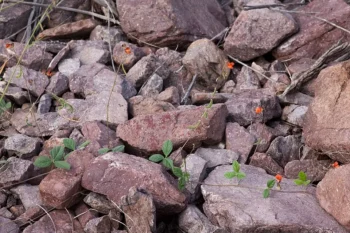
Variableleaf Bushbean: A Drought-Tolerant Legume for Southwestern Gardens
If you’re looking for a low-maintenance plant that can handle the heat and drought of the American Southwest, variableleaf bushbean (Macroptilium gibbosifolium) might catch your attention. This hardy perennial forb has found its way into gardens across Arizona, New Mexico, and Texas, where it’s become a naturalized part of the landscape.
What Is Variableleaf Bushbean?
Variableleaf bushbean is a perennial forb in the legume family, meaning it lacks significant woody tissue and dies back to ground level each year. True to its name, this plant produces leaves with variable shapes on the same plant – hence the variableleaf moniker. You might also encounter it under several scientific synonyms, including Macroptilium heterophyllum and Phaseolus heterophyllus.
Native Status and Distribution
Here’s where things get interesting: variableleaf bushbean isn’t actually native to the United States. This plant species has been introduced from its original range in tropical and subtropical Americas and now reproduces spontaneously in the wild across the southwestern states. It has established populations in Arizona, New Mexico, and Texas, where it persists without human intervention.
- Species observed
- No observations
Should You Plant It in Your Garden?
The answer depends on your gardening goals and philosophy. While variableleaf bushbean isn’t invasive or noxious, it is a non-native species. If you’re committed to native-only gardening, you might want to consider native alternatives like desert willow or native lupines that provide similar benefits to local ecosystems.
However, if you’re looking for a hardy, drought-tolerant plant that can handle tough southwestern conditions, variableleaf bushbean offers some appealing qualities:
- Excellent drought tolerance once established
- Nitrogen-fixing capabilities that improve soil
- Attractive purple to pink pea-like flowers
- Low maintenance requirements
- Pollinator-friendly blooms
Aesthetic Appeal and Landscape Role
Variableleaf bushbean produces charming small flowers in shades of purple to pink that bloom throughout the growing season. The trifoliate leaves create interesting texture, and as the name suggests, the leaf shapes can vary significantly even on the same plant. This variability adds visual interest to naturalized areas or wildflower gardens.
In landscape design, this plant works well as a ground cover in xerophytic gardens, naturalized areas, or wildlife gardens. Its sprawling habit and ability to fix nitrogen make it useful for erosion control and soil improvement in challenging sites.
Growing Conditions and Care
One of the biggest selling points of variableleaf bushbean is its adaptability to harsh conditions. Here’s what this tough little plant prefers:
- Sunlight: Full sun exposure
- Soil: Well-drained soils; tolerates poor, rocky, or sandy conditions
- Water: Drought tolerant once established; minimal irrigation needed
- USDA Hardiness Zones: 8-11
Planting and Establishment
Getting variableleaf bushbean started in your garden is refreshingly simple. Direct seeding in spring after the last frost works best. Scatter seeds in the desired area and lightly rake into the soil. The seeds don’t need much pampering – just occasional watering until germination occurs.
Once established, this plant requires minimal care. In fact, too much attention (especially overwatering) can actually harm it. Let nature take its course, and you’ll likely be rewarded with a self-sustaining patch that returns year after year.
Benefits to Wildlife
The flowers of variableleaf bushbean attract various pollinators, including bees and butterflies, making it a valuable addition to pollinator gardens. As a legume, it also contributes to soil health by fixing atmospheric nitrogen, which benefits surrounding plants.
The Bottom Line
Variableleaf bushbean is a tough, adaptable plant that can thrive in challenging southwestern conditions where many other plants struggle. While it’s not native to the region, it’s not considered invasive either. Whether you choose to include it in your garden depends on your personal gardening philosophy and goals.
If you do decide to grow it, you’ll find it’s one of the more forgiving plants you can choose – perfect for beginners or anyone looking to create a low-maintenance, drought-tolerant landscape. Just remember that sometimes the best choice for your local ecosystem might be a native alternative that provides similar benefits while supporting indigenous wildlife relationships.