Non-native Plants

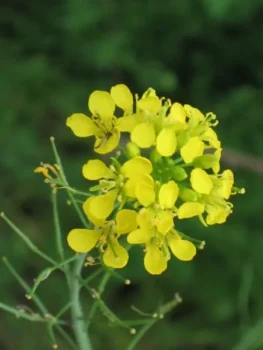
Variableleaf Yellowcress

Rorippa indica

USDA symbol: ROIN

biennial forb

Lower 48 states: non-native, naturalized
Puerto Rico: non-native, naturalized

If you’ve ever wondered about those small, weedy-looking plants with tiny yellow flowers growing near ponds or in soggy areas, you might have encountered variableleaf yellowcress (Rorippa indica). This humble little plant has quietly made itself at home across several U.S. states, though it’s not originally from around here. Variableleaf ...

Variableleaf Yellowcress: An Unassuming Wetland Wanderer

If you’ve ever wondered about those small, weedy-looking plants with tiny yellow flowers growing near ponds or in soggy areas, you might have encountered variableleaf yellowcress (Rorippa indica). This humble little plant has quietly made itself at home across several U.S. states, though it’s not originally from around here.

What Exactly is Variableleaf Yellowcress?

Variableleaf yellowcress is a non-native forb that belongs to the mustard family. As a forb, it’s essentially an herbaceous flowering plant without woody stems – think of it as the botanical equivalent of a soft-spoken neighbor who keeps a low profile. This adaptable little plant can be annual, biennial, or perennial depending on conditions, which probably explains part of its success in establishing itself in new territories.

You might also see this plant listed under its synonym, Rorippa dubia, in older botanical references.

Where You’ll Find It Growing

Originally from Asia, variableleaf yellowcress has made itself comfortable in Louisiana, Mississippi, New Jersey, New York, Oregon, and Puerto Rico. It’s one of those plants that reproduces on its own without any human help and has decided to stick around permanently.

  • Species observed
  • No observations

The Wetland Connection

Here’s where things get interesting – this plant has a thing for wet feet. Across most regions, variableleaf yellowcress is classified as facultative wetland, meaning it usually hangs out in wetlands but can tolerate drier conditions when needed. In some areas like the Caribbean and Arid West, it’s even more flexible, earning a facultative status that means it’s equally comfortable in wet or dry spots.

Should You Plant Variableleaf Yellowcress?

Here’s the honest truth: variableleaf yellowcress isn’t exactly a showstopper in the garden department. While it’s not considered invasive or harmful, it’s also not particularly ornamental. Its small yellow flowers are fairly inconspicuous, and it tends to have a weedy appearance that most gardeners aren’t actively seeking.

Better Native Alternatives

If you’re looking to support local ecosystems and create beautiful wetland or moisture-loving plantings, consider these native alternatives instead:

  • Native watercress species (Nasturtium species)
  • Wild bergamot (Monarda species)
  • Native sedges (Carex species)
  • Blue flag iris (Iris versicolor)
  • Cardinal flower (Lobelia cardinalis)

If You Encounter It in Your Garden

Variableleaf yellowcress prefers moist to wet soils and can tolerate both full sun and partial shade. It’s not particularly picky about soil type, which explains its success in various habitats. If it shows up uninvited in your garden, it’s generally easy to remove by hand-pulling, especially when the soil is moist.

The Bottom Line

While variableleaf yellowcress isn’t a troublemaker, it’s also not adding much to your garden’s beauty or ecological value. If you’re passionate about supporting native wildlife and creating stunning landscapes, your energy is better spent on native plants that offer superior benefits for both pollinators and your garden’s overall health. Think of it as choosing between a plain cracker and a gourmet meal – both will fill space, but one definitely brings more to the table!

Rorippa indica is also known as...

Often we refer to plants by their common names. When shopping for plants the scientific name is the best way to positively identify the plant species you desire. But some plants have more than one name! While it doesn't happen often, nurseries might display one name while you're searching for another. Rorippa indica is also known as:

Rorippa dubia | USDA symbol: RODU7

Why do some plants have more than one name? Over time plant species may be renamed for a few reasons:

  1. Botanists in different regions named the same plant without knowing it had already been classified.
  2. A species was reclassified after scientific advances in, for example, DNA analysis.
  3. Slight variations within a species are sometimes mistakenly identified as entirely new species.

Wetland Status

The rule of seasoned gardeners and landscapers is to choose the "right plant for the right place" — matching plants to their ideal growing conditions, so they'll thrive with less care and fewer inputs. But the simplicity of this catchphrase conceals how tricky plant selection can be if you don't have the right information. While tags on nursery plants list watering requirements, there's more to the story.

Knowing a plant's wetland status can simplify the process by revealing the interaction between plants, water, and soil. You might be surprised to learn that popular landscape plants are wetland species! And what may be a wetland plant in one area, in another it might thrive in drier conditions. The table below gives insight into the preferred growing conditions of this plant throughout its geographical distribution.

Region
Preferred Habitat

Atlantic and Gulf Coastal Plain (AL, AR, DC, DE, FL, GA, IL, KY, LA, MD, MS, MO, NC, NJ, OK, PA, SC, TN, TX, VA)

Facultative Wetland

Caribbean (PR, VI)

Facultative

Eastern Mountains and Piedmont (AL, AR, DC, DE, GA, IL, IN, KS, KY, MD, MO, NC, NJ, NY, OH, OK, PA, SC, TN, VA, WV)

Facultative Wetland

Northcentral & Northeast ()

Facultative Wetland

Western Mountains, Valleys, and Coast (AZ, CA, CO, ID, MT, NV, NM, OR, SD, UT, WA, WY)

Facultative Wetland

Arid West (AZ, CA, CO, ID, MT, NV, NM, OR, TX, UT, WA, WY)

Facultative

Atlantic and Gulf Coastal Plain (AL, AR, DC, DE, FL, GA, IL, KY, LA, MD, MS, MO, NC, NJ, OK, PA, SC, TN, TX, VA)

Facultative Wetland

Caribbean (PR, VI)

Facultative

Northcentral & Northeast ()

Facultative Wetland

Western Mountains, Valleys, and Coast (AZ, CA, CO, ID, MT, NV, NM, OR, SD, UT, WA, WY)

Facultative Wetland
Wetland Glossary
Obligate Wetland
Facultative Wetland
Facultative
Facultative Upland
Obligate Upland
Almost always occurs in wetlands
Usually occurs in wetlands but may occur in non-wetlands
Can occur in wetlands and non-wetlands
Usually occurs in non-wetlands but may occur in wetlands
Almost never occurs in wetlands

Classification

Group: Dicot
Kingdom: Plantae - Plants
Subkingdom: Tracheobionta - Vascular plants
Superdivision: Spermatophyta - Seed plants
Division: Magnoliophyta - Flowering plants
Class: Magnoliopsida - Dicotyledons
Subclass: Dilleniidae
Order: Capparales
Family: Brassicaceae Burnett - Mustard family
Genus: Rorippa Scop. - yellowcress

Species: Rorippa indica (L.) Hiern. - variableleaf yellowcress

Plant data source: USDA, NRCS 2025. The PLANTS Database. https://plants.usda.gov,. 2/25/2025. National Plant Data Team, Greensboro, NC USA