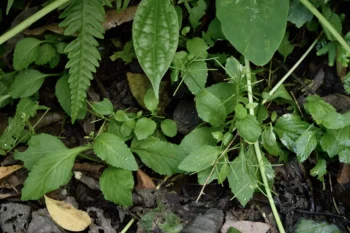
Variableleaf Yellowcress: A Lesser-Known Non-Native Forb
If you’ve stumbled across the name variableleaf yellowcress in your gardening research, you’re looking at quite the botanical puzzle piece. Scientifically known as Rorippa indica var. indica, this little-known plant has managed to establish itself in scattered locations across the United States, though information about it remains surprisingly scarce.
What Exactly Is Variableleaf Yellowcress?
Variableleaf yellowcress is a non-native forb that belongs to the mustard family. As a forb, it’s essentially a soft-stemmed plant without woody tissue – think of it as the botanical equivalent of a gentle soul that never develops a tough exterior. This adaptable little plant can live as an annual, biennial, or perennial, which means it might stick around for just one season or decide to make your garden its long-term home.
Like many plants with complex botanical histories, this species goes by several scientific aliases, including Nasturtium heterophyllum and Sisymbrium indicum, among others. Don’t let the name confusion fool you though – it’s all the same plant!
Where You’ll Find It Growing
Currently, variableleaf yellowcress has been documented in a rather eclectic mix of locations: Louisiana, New Jersey, New York, Oregon, and Puerto Rico. This scattered distribution suggests it’s quite the traveler, though it hasn’t become widespread in any particular region.
- Species observed
- No observations
The Gardener’s Dilemma: To Plant or Not to Plant?
Here’s where things get tricky for the conscientious gardener. While variableleaf yellowcress isn’t currently listed as invasive or noxious, its non-native status means we can’t be entirely sure how it might behave in different environments. The plant reproduces spontaneously in the wild, which shows it’s quite capable of taking care of itself once established.
What We Don’t Know (And Why That Matters)
Unfortunately, detailed information about this particular variety is remarkably sparse. We don’t have reliable data on:
- Specific growing requirements
- Mature size and appearance
- Pollinator relationships
- Wildlife benefits
- Preferred habitat conditions
- USDA hardiness zones
This lack of information makes it challenging to recommend for home gardens, especially when so many well-documented native alternatives are available.
Consider Native Alternatives Instead
Rather than gambling on a plant with unknown garden behavior, why not explore native yellowcress species or other native forbs in your area? Native plants offer several advantages:
- Established relationships with local pollinators
- Adapted to local growing conditions
- Support for native wildlife
- Well-documented care requirements
Contact your local native plant society or extension office to discover native forbs that would thrive in your specific location and provide the ecological benefits that make gardening truly rewarding.
The Bottom Line
While variableleaf yellowcress might sound intriguing, the lack of detailed horticultural information combined with its non-native status makes it a questionable choice for most gardens. Sometimes the most responsible gardening decision is to say thanks, but no thanks to mysterious plants and instead champion the native species that truly belong in our landscapes.
After all, the best gardens are those that work harmoniously with their local ecosystems – and that’s something we can be certain about, even when plant information is scarce!