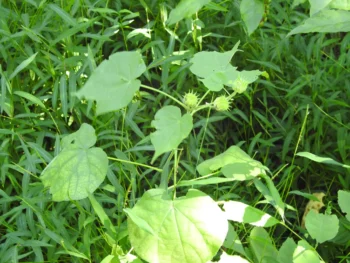
Velvetleaf: The Garden Volunteer You Never Asked For
If you’ve ever found a mystery plant with large, heart-shaped, velvety leaves sprouting up in your garden beds, chances are you’ve met velvetleaf (Abutilon theophrasti). This annual forb has a knack for showing up uninvited and making itself right at home – whether you want it there or not!
What Exactly is Velvetleaf?
Velvetleaf, also known by its botanical name Abutilon theophrasti, is a non-native annual plant that originally hails from Asia. As its common name suggests, the most distinctive feature of this plant is its soft, fuzzy leaves that feel remarkably like velvet to the touch. These heart-shaped leaves can grow quite large, giving the plant a bold, tropical appearance.
You might also encounter this plant listed under older scientific names like Abutilon avicennae, but don’t let the name variations confuse you – it’s all the same enthusiastic volunteer.
Where You’ll Find This Uninvited Guest
Velvetleaf has made itself comfortable across most of North America, from coast to coast and border to border. You can find it growing in nearly every U.S. state and most Canadian provinces, from Alabama to Alberta and everywhere in between. This widespread distribution tells you everything you need to know about how adaptable and persistent this plant can be.
- Species observed
- No observations
What Does Velvetleaf Look Like?
Identifying velvetleaf is pretty straightforward once you know what to look for:
- Large, heart-shaped leaves covered in soft, velvety hairs
- Leaves can grow 4-10 inches across
- Plants typically reach 3-8 feet in height
- Small, yellow flowers that look like tiny hibiscus blooms
- Flowers give way to distinctive seed pods that split open when mature
- Sturdy, upright growth habit
The Good, The Bad, and The Weedy
Let’s be honest – velvetleaf falls squarely into the weedy category for most gardeners. While it does produce cheerful yellow flowers that attract bees and other pollinators, this plant’s aggressive self-seeding habits and rapid growth make it more of a garden crasher than a welcome guest.
On the plus side, velvetleaf is incredibly drought-tolerant once established and can grow in a variety of soil conditions. However, these same qualities that make it resilient also make it difficult to control once it takes hold in your garden.
Growing Conditions (If You’re Curious)
Velvetleaf is remarkably unfussy about its growing conditions:
- Thrives in full sun but tolerates partial shade
- Adapts to various soil types and pH levels
- Prefers upland, non-wetland conditions in most regions
- Hardy as an annual in USDA zones 2-11
- Germinates easily from seed in spring
Should You Plant Velvetleaf?
Here’s where we need to have a frank conversation. While velvetleaf isn’t necessarily harmful to your garden’s ecosystem, it’s not typically something you’d want to plant intentionally. Its vigorous self-seeding can quickly turn a small patch into a velvetleaf takeover, and it can compete with more desirable plants for space and resources.
If you’re looking for native alternatives that offer similar bold foliage and pollinator benefits, consider these options instead:
- Wild bergamot (Monarda fistulosa) for pollinator appeal
- Cup plant (Silphium perfoliatum) for large, distinctive leaves
- Wild ginger (Asarum canadense) for heart-shaped foliage in shade
Managing Velvetleaf in Your Garden
If velvetleaf has already made itself at home in your garden, the best approach is early intervention. Pull seedlings when they’re small and the soil is moist. For larger plants, cut them before they set seed to prevent next year’s crop of volunteers.
Remember, velvetleaf seeds can remain viable in soil for many years, so don’t be surprised if you’re dealing with this plant for several seasons even after you think you’ve eliminated it.
The Bottom Line
While velvetleaf might win points for resilience and its soft, touchable leaves, it’s generally better appreciated from a distance – like in a field or vacant lot – rather than in your carefully planned garden beds. Focus your planting energy on native species that will provide lasting beauty and ecological benefits without the headaches of aggressive self-seeding.
After all, the best garden volunteers are the ones you actually invited to the party!