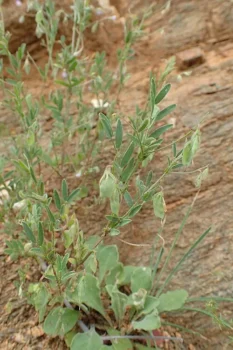
Vicia loiseleurii: The Mystery Vetch That’s Better Left a Mystery
If you’ve stumbled across the name Vicia loiseleurii in your botanical wanderings, you’ve discovered one of gardening’s true enigmas. This obscure member of the pea family (Fabaceae) is so rarely documented that even seasoned botanists scratch their heads when it comes up in conversation.
What We Know (Which Isn’t Much)
Vicia loiseleurii goes by a couple of scientific aliases—you might see it listed as Vicia litvinovii or Vicia meyeri in older botanical references. But here’s the thing: finding concrete information about this plant is like searching for a needle in a haystack made of other needles.
We know it’s a vetch, which means it’s related to those cheerful climbing peas and beans you might already have in your garden. Beyond that? The details get surprisingly fuzzy. There’s no widely recognized common name, no clear native range, and certainly no growing guides tucked away in your favorite gardening references.
The Geographic Mystery
While we can’t pinpoint exactly where Vicia loiseleurii calls home, some botanical sleuthing suggests it might hail from Mediterranean or Middle Eastern regions. But without reliable distribution data, we’re essentially playing botanical guessing games.
Why This Matters for Your Garden
Here’s where things get practical: should you plant something you know virtually nothing about? Probably not. When a plant species lacks basic horticultural information—things like preferred growing conditions, hardiness zones, or even whether it plays well with other garden plants—it becomes more of a gamble than a garden investment.
Better Alternatives for Vetch Lovers
If you’re drawn to the idea of growing vetches (and who can blame you—they’re nitrogen-fixing powerhouses!), consider these well-documented native alternatives instead:
- American Vetch (Vicia americana) – A robust native climber perfect for wildflower gardens
- Hairy Vetch (Vicia villosa) – Though not native, it’s widely naturalized and excellent for soil improvement
- Wild Pea (Lathyrus spp.) – Native relatives that offer similar growth habits with better documentation
The Responsible Gardener’s Approach
When faced with mysterious plants like Vicia loiseleurii, the wisest approach is often patience. Stick with plants that have:
- Well-documented native ranges
- Clear growing requirements
- Known ecological benefits
- Available propagation information
Your garden—and the local ecosystem—will thank you for choosing plants with proven track records over botanical question marks.
The Bottom Line
While Vicia loiseleurii might intrigue the botanically curious, it’s not a practical choice for home gardeners. Without basic information about its needs, habits, or even its exact origins, you’d be flying blind. Instead, channel that enthusiasm toward the many well-documented native plants that can provide similar benefits with far less guesswork.
Sometimes the most mysterious plants are better left to the botanists and herbarium specimens. Your garden deserves plants that come with instructions, not riddles.