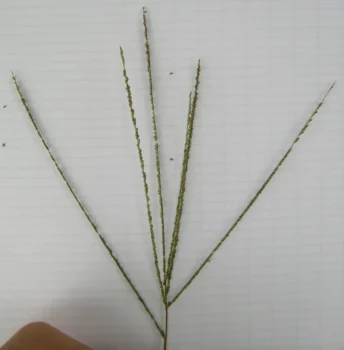
Violet Crabgrass: An Unassuming Grass with Subtle Purple Charm
If you’ve ever noticed a delicate grass with purple-tinged stems and seed heads popping up in your yard, you might have encountered violet crabgrass (Digitaria violascens). This understated little grass has quietly made itself at home across much of the United States, and while it may not win any garden beauty contests, it has some interesting qualities worth knowing about.
What is Violet Crabgrass?
Violet crabgrass is a small, annual to short-lived perennial grass that belongs to the graminoid family – essentially, it’s a true grass. Don’t let the name fool you; despite being called crabgrass, it’s quite different from the notorious lawn weed most gardeners love to hate. This species brings a subtle purple hue to its stems and seed heads, which is where it gets its violet moniker.
Originally native to Asia, violet crabgrass has naturalized across many regions of North America, where it reproduces on its own and tends to persist without human intervention.
Where Does Violet Crabgrass Grow?
You can find violet crabgrass established in Alabama, Arkansas, Florida, Georgia, Hawaii, Indiana, Kentucky, Louisiana, Massachusetts, Mississippi, North Carolina, Oklahoma, South Carolina, Tennessee, and Texas, as well as in Guam, Palau, and Puerto Rico. It’s adapted to USDA hardiness zones 6-10, making it quite versatile across different climate conditions.
- Species observed
- No observations
Garden Appeal and Characteristics
Let’s be honest – violet crabgrass isn’t going to be the star of your garden show. However, it does offer some subtle charms:
- Delicate purple coloration in stems and seed heads
- Low-growing, fine-textured appearance
- Adaptable to various growing conditions
- Self-seeding nature means it can fill in bare spots
This grass works best in informal, naturalized settings rather than formal garden designs. Think meadow gardens, prairie restorations, or areas where you want low-maintenance ground cover that can handle some neglect.
Growing Conditions and Care
One of violet crabgrass’s strongest suits is its adaptability. Here’s what it prefers:
- Light: Full sun to partial shade
- Soil: Adaptable to various soil types and conditions
- Water: Drought tolerant once established
- Maintenance: Very low – this grass pretty much takes care of itself
Depending on your region, violet crabgrass shows different moisture preferences. In some areas, it can handle both wet and dry conditions (facultative), while in others, like the Caribbean, it strongly prefers drier upland sites.
Should You Plant Violet Crabgrass?
Here’s where things get interesting. While violet crabgrass isn’t invasive or harmful, it’s also not native to North America. If you’re specifically focused on supporting local ecosystems and native wildlife, you might want to consider native grass alternatives instead.
However, if you’re looking for a low-maintenance grass that can handle challenging conditions and you’re not concerned about native vs. non-native status, violet crabgrass can serve as functional ground cover in informal settings.
Native Alternatives to Consider
If you like the idea of a low-maintenance, fine-textured grass but prefer native options, consider these alternatives based on your region:
- Buffalo grass (Bouteloua dactyloides) for drier climates
- Little bluestem (Schizachyrium scoparium) for prairie-style gardens
- Purple lovegrass (Eragrostis spectabilis) for similar purple-tinted appeal
Wildlife and Pollinator Value
As a wind-pollinated grass, violet crabgrass doesn’t offer much direct benefit to pollinators like bees and butterflies. However, grasses do provide habitat structure and seeds for birds and small wildlife. If supporting pollinators is a priority, you’ll get more bang for your buck with native wildflowers and flowering shrubs.
The Bottom Line
Violet crabgrass is neither a garden villain nor a horticultural hero – it’s simply a adaptable little grass that’s made itself at home in North America. Whether you choose to welcome it into your landscape or seek out native alternatives depends on your gardening goals and priorities. If you do decide to work with it, you’ll find it’s refreshingly low-maintenance and surprisingly resilient.
Remember, the best garden is one that aligns with your values, maintenance capacity, and aesthetic preferences. Sometimes the most unassuming plants can play valuable supporting roles in creating the landscape you love.