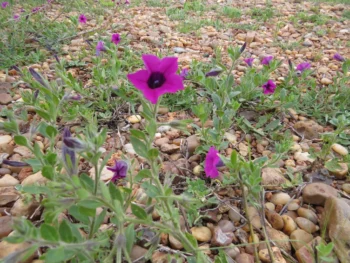
Violetflower Petunia: A Charming Non-Native Wildflower Worth Considering
Meet the violetflower petunia (Petunia integrifolia), a delightful little wildflower that’s been quietly making itself at home across much of the United States. While it may not be a native species, this South American charmer has won over many gardeners with its easygoing nature and continuous display of small purple blooms.
What is Violetflower Petunia?
Violetflower petunia is a non-woody flowering plant (technically called a forb) that can behave as either an annual or perennial depending on your climate. Originally from South America, this petite member of the nightshade family has naturalized across many U.S. states, reproducing on its own without human intervention.
You might also see it listed under its synonym Petunia violacea in older gardening references, but Petunia integrifolia is the currently accepted scientific name.
Where Does It Grow?
This adaptable little plant has established populations across a wide swath of the United States, from Maine down to Florida and west to California and Texas. You’ll also find it thriving in Puerto Rico. It’s particularly common in the southeastern states where the climate most closely resembles its South American origins.
- Species observed
- No observations
Why Gardeners Love (and Sometimes Question) This Plant
The violetflower petunia offers several appealing qualities that make it attractive to gardeners:
- Produces small, funnel-shaped purple flowers continuously from spring through fall
- Extremely low-maintenance once established
- Drought tolerant and adaptable to various soil conditions
- Self-sows readily, creating naturalized drifts
- Attracts butterflies, moths, and bees with its nectar
- Works well in containers, as ground cover, or in wildflower gardens
However, since it’s not native to North America, some gardeners prefer to choose indigenous alternatives that better support local ecosystems and wildlife.
Garden Design and Landscape Use
This trailing, spreading plant works beautifully in several garden settings:
- Cottage gardens: Adds informal charm with its self-seeding habit
- Wildflower meadows: Naturalizes well in informal plantings
- Container gardens: Trails nicely over pot edges
- Rock gardens: Tolerates well-draining, lean soils
- Border fronts: Provides continuous color at ground level
Growing Conditions and Care
One of the violetflower petunia’s greatest assets is its easy-care nature. Here’s what it needs to thrive:
Light: Full sun to partial shade (at least 4-6 hours of direct sunlight)
Soil: Well-draining soil of almost any type; actually performs better in lean soils
Water: Drought tolerant once established; avoid overwatering
Climate: Hardy in USDA zones 9-11 as a perennial; grown as an annual in cooler zones
Planting and Care Tips
Getting started with violetflower petunias is refreshingly simple:
- Start from seed in spring after the last frost
- Scatter seeds directly in the garden or start indoors 6-8 weeks before last frost
- Seeds need light to germinate, so barely cover them with soil
- Space plants 6-12 inches apart if transplanting
- Deadhead spent flowers to encourage continued blooming
- Allow some flowers to go to seed if you want self-sowing
- Minimal fertilization needed – too much nutrition can reduce flowering
Native Alternatives to Consider
While violetflower petunia isn’t problematic, native plant enthusiasts might consider these indigenous alternatives that offer similar benefits:
- Wild bergamot (Monarda fistulosa) for purple flowers and pollinator appeal
- Purple prairie clover (Dalea purpurea) for drought tolerance and ground cover
- Wild lupine (Lupinus perennis) for purple spikes and butterfly host plant benefits
- Local native violets for low-growing purple flowers
The Bottom Line
Violetflower petunia represents a middle ground in the gardening world – it’s naturalized without being invasive, beautiful without being flashy, and useful without being essential. If you’re drawn to its continuous blooms and carefree nature, it can certainly earn a place in your garden. Just remember that choosing native plants when possible provides the greatest benefit to local wildlife and ecosystems.
Whether you’re a beginning gardener looking for something nearly foolproof or an experienced gardener wanting to add some casual charm to a wildflower area, this little South American immigrant might just win you over with its unpretentious beauty and reliable performance.