Non-native Plants

Vulpia Myuros

Vulpia myuros

USDA symbol: VUMY

annual grass

Alaska: non-native, naturalized
Canada: non-native, naturalized
Hawaii: non-native, naturalized
Lower 48 states: non-native, naturalized
Pacific Basin excluding Hawaii: non-native, naturalized

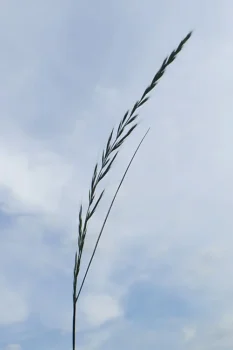
If you’ve ever wondered about those thin, wispy grass seedheads popping up in disturbed areas around your garden, you might be looking at Vulpia myuros. This annual grass goes by several common names including foxtail fescue, rattail fescue, and rat-tail fescue – names that perfectly capture its distinctive, narrow appearance. ...

Vulpia myuros: Understanding This Widespread Non-Native Grass

If you’ve ever wondered about those thin, wispy grass seedheads popping up in disturbed areas around your garden, you might be looking at Vulpia myuros. This annual grass goes by several common names including foxtail fescue, rattail fescue, and rat-tail fescue – names that perfectly capture its distinctive, narrow appearance.

What Is Vulpia myuros?

Vulpia myuros is an annual grass that belongs to the graminoid family, meaning it’s a true grass with the characteristic grass-like growth pattern. Originally from the Mediterranean region and Europe, this species has made itself at home across North America, establishing populations that persist and reproduce without human intervention.

You might also encounter this plant listed under various scientific synonyms, including Festuca megalura or Festuca myuros, as botanists have reclassified it over the years.

Where Does It Grow?

This adaptable grass has spread remarkably far from its native range. You can find Vulpia myuros established across almost all U.S. states, Canadian provinces, and even in Alaska and Hawaii. From Alabama to Wyoming, and from British Columbia to Guam, this grass has proven incredibly successful at colonizing new territories.

  • Species observed
  • No observations

Growing Habits and Appearance

As an annual grass, Vulpia myuros completes its entire life cycle in one growing season. It’s not particularly showy – you won’t find garden centers selling it for ornamental purposes. Instead, it typically appears as a relatively small, inconspicuous grass with those characteristic thin, rat-tail-like seed heads that give it its common names.

Habitat Preferences

This grass shows interesting regional variations in its moisture tolerance:

  • In most regions, it’s considered facultative upland, meaning it usually grows in non-wetland areas but can occasionally tolerate some moisture
  • In Alaska and the Eastern Mountains, it’s obligate upland, almost never occurring in wet areas
  • In the Great Plains, it’s more flexible, able to handle both wet and dry conditions

Should You Plant Vulpia myuros?

Here’s the straightforward answer: most gardeners wouldn’t intentionally plant this grass. While it’s not officially classified as invasive in our available data, Vulpia myuros is what many would consider a weedy species. It tends to show up on its own in disturbed soils, vacant lots, and areas where other vegetation has been removed.

If you’re looking to establish grass in your landscape, you’ll likely be much happier with native alternatives that offer better wildlife benefits, more attractive appearance, and integrate better with local ecosystems.

Better Native Alternatives

Instead of Vulpia myuros, consider these native grass options:

  • Native fescue species appropriate to your region
  • Local bunchgrasses that provide better wildlife habitat
  • Regional prairie grasses that support pollinators and birds

Check with your local native plant society or extension office to find the best native grass species for your specific area and gardening goals.

If It Shows Up Anyway

Since Vulpia myuros is already widespread, don’t be surprised if it appears in your garden without invitation. As an annual, individual plants live only one season, but they can set seed and return the following year. If you prefer not to have it around, removing plants before they set seed can help reduce future populations.

The good news is that establishing healthy populations of native plants often naturally outcompetes weedy species like this one, creating a more balanced and regionally appropriate landscape.

Vulpia myuros is also known as...

Often we refer to plants by their common names. When shopping for plants the scientific name is the best way to positively identify the plant species you desire. But some plants have more than one name! While it doesn't happen often, nurseries might display one name while you're searching for another. Vulpia myuros is also known as:

Festuca megalura | USDA symbol: FEME
Festuca megalura var. hirsuta & | USDA symbol: FEMEH
Festuca myuros | USDA symbol: FEMY2
Vulpia megalura | USDA symbol: VUME
Vulpia myuros var. hirsuta | USDA symbol: VUMYH
Vulpia myuros var. myuros | USDA symbol: VUMYM2

Why do some plants have more than one name? Over time plant species may be renamed for a few reasons:

  1. Botanists in different regions named the same plant without knowing it had already been classified.
  2. A species was reclassified after scientific advances in, for example, DNA analysis.
  3. Slight variations within a species are sometimes mistakenly identified as entirely new species.

Wetland Status

The rule of seasoned gardeners and landscapers is to choose the "right plant for the right place" — matching plants to their ideal growing conditions, so they'll thrive with less care and fewer inputs. But the simplicity of this catchphrase conceals how tricky plant selection can be if you don't have the right information. While tags on nursery plants list watering requirements, there's more to the story.

Knowing a plant's wetland status can simplify the process by revealing the interaction between plants, water, and soil. You might be surprised to learn that popular landscape plants are wetland species! And what may be a wetland plant in one area, in another it might thrive in drier conditions. The table below gives insight into the preferred growing conditions of this plant throughout its geographical distribution.

Region
Preferred Habitat

Alaska ()

Obligate Upland

Arid West (AZ, CA, CO, ID, MT, NV, NM, OR, TX, UT, WA, WY)

Facultative Upland

Atlantic and Gulf Coastal Plain (AL, AR, DC, DE, FL, GA, IL, KY, LA, MD, MS, MO, NC, NJ, OK, PA, SC, TN, TX, VA)

Facultative Upland

Eastern Mountains and Piedmont (AL, AR, DC, DE, GA, IL, IN, KS, KY, MD, MO, NC, NJ, NY, OH, OK, PA, SC, TN, VA, WV)

Obligate Upland

Great Plains (CO, KS, MN, MT, NE, NM, ND, OK, SD, TX, WY)

Facultative

Hawaii ()

Facultative Upland

Midwest (IL, IN, IA, KS, KY, MI, MN, MO, NE, ND, OK, OH, SD, WI)

Facultative Upland

Northcentral & Northeast ()

Facultative Upland

Western Mountains, Valleys, and Coast (AZ, CA, CO, ID, MT, NV, NM, OR, SD, UT, WA, WY)

Facultative Upland
Wetland Glossary
Obligate Wetland
Facultative Wetland
Facultative
Facultative Upland
Obligate Upland
Almost always occurs in wetlands
Usually occurs in wetlands but may occur in non-wetlands
Can occur in wetlands and non-wetlands
Usually occurs in non-wetlands but may occur in wetlands
Almost never occurs in wetlands

Classification

Group: Monocot
Kingdom: Plantae - Plants
Subkingdom: Tracheobionta - Vascular plants
Superdivision: Spermatophyta - Seed plants
Division: Magnoliophyta - Flowering plants
Subdivision: N/A
Class: Liliopsida - Monocotyledons
Subclass: Commelinidae
Order: Cyperales
Family: Poaceae Barnhart - Grass family
Genus: Vulpia C.C. Gmel. - fescue

Species: Vulpia myuros (L.) C.C. Gmel.

Plant data source: USDA, NRCS 2025. The PLANTS Database. https://plants.usda.gov,. 2/25/2025. National Plant Data Team, Greensboro, NC USA