Wall Bedstraw: A Delicate Ground Cover with European Roots
If you’ve ever noticed tiny white flowers scattered across disturbed ground or along garden edges, you might have encountered wall bedstraw (Galium parisiense). This delicate annual herb has quietly made itself at home across parts of North America, though its story begins far from our shores.
What is Wall Bedstraw?
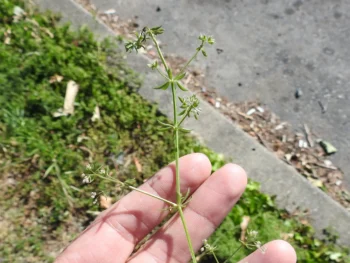
Wall bedstraw is a small annual forb – that’s garden-speak for a soft-stemmed plant that dies back each year rather than developing woody growth. As a member of the bedstraw family, it shares relatives with plants historically used for stuffing mattresses (hence the bedstraw name). This particular species features fine, narrow leaves arranged in whorls around square stems, creating a delicate, almost lacy appearance.
You might also encounter this plant listed under several botanical synonyms, including Galium litigiosum var. nanum, Galium parisiense var. trichocarpum, and Galium parisiense var. typicum – names that reflect the complex history of plant classification.
Native Status and Distribution
Here’s where things get interesting: wall bedstraw isn’t actually native to North America. This European traveler has established itself as a non-native species that reproduces without human help and persists in both Canada and the lower 48 states. Currently, you’ll find it growing in British Columbia, California, Oregon, and Washington, where it has adapted to local conditions.
- Species observed
- No observations
Where Wall Bedstraw Likes to Grow
Wall bedstraw shows different preferences depending on where it’s growing. In the arid western regions, it’s considered an obligate upland plant – meaning it almost never appears in wetlands. However, in other regions like the Atlantic and Gulf Coastal Plain, Eastern Mountains and Piedmont, and Western Mountains, Valleys, and Coast, it’s classified as facultative upland, occasionally tolerating wetter conditions but generally preferring drier sites.
This adaptable little plant thrives in well-drained soils and can handle both full sun and partial shade. It’s particularly at home in disturbed areas, along paths, and in naturalized garden spaces.
Should You Grow Wall Bedstraw?
The decision to include wall bedstraw in your garden depends on your goals and gardening philosophy. Here are some considerations:
Potential Benefits:
- Low-maintenance annual that self-seeds
- Delicate texture adds fine detail to garden compositions
- Tolerates poor soils and challenging sites
- Small white flowers provide subtle seasonal interest
- Suitable for naturalized or wild garden areas
Potential Drawbacks:
- Can become weedy and spread beyond desired areas
- Limited ornamental value compared to showier natives
- May compete with native plants for resources
- Minimal wildlife and pollinator benefits
Growing Wall Bedstraw Successfully
If you decide to work with wall bedstraw, it’s refreshingly undemanding. This plant thrives in USDA hardiness zones 6-10, adapting to various soil types as long as drainage is adequate. Once established, it requires minimal care and will readily self-seed for future seasons.
Plant in areas where its spreading habit won’t conflict with more desirable species. It works well in transition zones between cultivated and wild areas, or in spaces where you want a naturalized, slightly weedy aesthetic.
Consider Native Alternatives
While wall bedstraw has its place, consider exploring native bedstraw species that offer similar characteristics while supporting local ecosystems. Native alternatives often provide better habitat and food sources for local wildlife, including beneficial insects and birds that have evolved alongside these plants.
Research native Galium species in your region, or consult with local native plant societies to discover indigenous options that can fill similar roles in your landscape design.
The Bottom Line
Wall bedstraw represents an interesting case study in non-native plants that have found their niche without becoming aggressively invasive. While it won’t win any beauty contests, it offers a low-key option for gardeners seeking to establish naturalized areas or work with challenging sites. Just remember to keep an eye on its spreading tendencies and consider whether native alternatives might better serve your garden’s ecological goals.