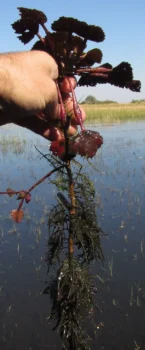
Water Chestnut: A Beautiful but Problematic Aquatic Invader
If you’ve ever spotted diamond-shaped leaves floating in perfect rosettes on a pond’s surface, you might have encountered the water chestnut (Trapa natans). While this aquatic plant certainly catches the eye with its geometric beauty, there’s a compelling reason why you shouldn’t add it to your water garden – and why many states have actually banned it entirely.
What Exactly Is Water Chestnut?
Water chestnut is a perennial aquatic plant that goes by the botanical name Trapa natans. As a forb (essentially a non-woody plant), it spends its life floating on water surfaces, creating distinctive rosettes of serrated, diamond-shaped leaves. The plant produces small, inconspicuous white flowers and develops characteristic four-horned, spiny nuts that give it away immediately to those in the know.
Don’t let the name fool you, though – this isn’t the crunchy water chestnut you might find in your stir-fry. That’s an entirely different plant!
The Big Problem: It’s an Invasive Species
Here’s where things get serious. Water chestnut isn’t native to North America – it originally comes from Europe, Asia, and parts of Africa. Since being introduced to our continent, it has proven to be quite the troublemaker. This plant is currently listed as invasive and prohibited in multiple states, including:
- Connecticut (Invasive, Prohibited)
- Michigan (Watch List, Prohibited)
- Minnesota (Prohibited)
- New Hampshire (Prohibited)
- Wisconsin (Prohibited)
Alabama has even classified it as a Class C noxious weed, which means it’s considered particularly harmful to local ecosystems.
Where You Might Find It
Despite being unwelcome, water chestnut has established itself across several states and provinces. You might encounter it in Quebec, Delaware, the District of Columbia, Maryland, Massachusetts, New Jersey, New York, Pennsylvania, Vermont, and Virginia.
- Species observed
- No observations
Why It’s Such a Problem
Water chestnut is what we call an obligate wetland species, meaning it almost always occurs in wetlands. Once established, it can completely take over aquatic habitats, forming dense mats that:
- Block sunlight from reaching native aquatic plants below
- Reduce oxygen levels in the water
- Interfere with recreational activities like swimming and boating
- Crowd out native species that wildlife depends on
The plant’s ability to reproduce both sexually (through seeds) and vegetatively makes it particularly aggressive at spreading.
Our Strong Recommendation: Don’t Plant It
We cannot stress this enough – please do not plant water chestnut in your pond, water garden, or any aquatic feature. Even if it’s not yet prohibited in your specific area, introducing this species can have devastating consequences for local waterways and native ecosystems.
Better Alternatives for Your Water Garden
If you’re looking to add floating plants to your aquatic garden, consider these native alternatives instead:
- American lotus (Nelumbo lutea)
- Fragrant white water lily (Nymphaea odorata)
- Spatterdock (Nuphar advena)
- Water shield (Brasenia schreberi)
These native species will provide similar aesthetic appeal while supporting local wildlife and maintaining ecological balance.
What to Do If You Spot It
If you encounter water chestnut in the wild, report it to your local environmental authorities or invasive species management program. Early detection and rapid response are crucial for preventing new infestations from taking hold.
Remember, the most beautiful garden is one that works in harmony with local ecosystems rather than against them. While water chestnut might look appealing floating serenely on the water’s surface, its impact on native habitats makes it a plant that’s better admired in photographs than in person.