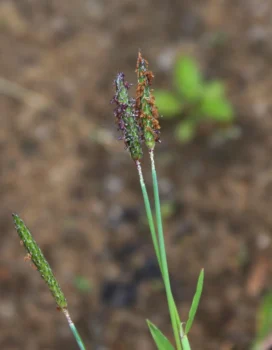
Water Foxtail: A Wetland Grass for Challenging Soggy Spots
If you’ve got a perpetually soggy corner of your garden that seems impossible to tame, you might want to meet water foxtail (Alopecurus geniculatus). This perennial grass thrives where other plants fear to tread – in those waterlogged areas that make most gardeners throw up their hands in defeat.
What Is Water Foxtail?
Water foxtail is a hardy perennial grass that’s perfectly at home in wet, marshy conditions. With its fine-textured green foliage and modest 2-foot height, it’s not going to win any beauty contests, but it serves an important functional role in wetland environments. The plant gets its name from its distinctive seed heads that somewhat resemble a fox’s tail, though they’re fairly inconspicuous compared to showier ornamental grasses.
A Note About Its Origins
Here’s something important to know: water foxtail isn’t native to North America. Originally from Europe and Asia, this grass has established itself across the continent and now grows in practically every U.S. state and Canadian province. While it’s not currently listed as invasive, its non-native status means you might want to consider native alternatives for your wetland projects.
Where You’ll Find Water Foxtail
This adaptable grass has made itself at home from Alaska to Texas, and from coast to coast. You’ll find it growing wild in wet meadows, ditches, pond edges, and other consistently moist areas throughout North America.
- Species observed
- No observations
Growing Conditions: It’s All About the Water
Water foxtail lives up to its wetland reputation – it’s classified as an Obligate Wetland plant, which is a fancy way of saying it almost always needs wet feet to thrive. Here’s what it needs to be happy:
- Moisture: Consistently wet to saturated soil – this isn’t a plant for dry gardens
- Light: Full sun to partial shade, though it’s shade intolerant
- Soil: Adaptable to fine, medium, or coarse-textured soils as long as they stay wet
- pH: Tolerates acidic to neutral conditions (4.0-7.5)
- Temperature: Hardy in USDA zones 3-9, tolerating temperatures as low as -43°F
Garden Role and Design Ideas
Let’s be honest – water foxtail isn’t going to be the star of your garden show. Its green flowers are inconspicuous, and it doesn’t offer much in terms of fall color or winter interest. However, it excels in specific situations:
- Erosion control along ponds, streams, or drainage areas
- Naturalizing wet meadows or bog gardens
- Filling in problem areas where nothing else will grow
- Wetland restoration projects
Planting and Care Tips
The good news is that once established, water foxtail is fairly low-maintenance – if you can provide the wet conditions it craves:
- Planting: Best established by seed in spring or by sprigs
- Seeding rate: 19,000-43,000 seeds per acre for large areas
- Growth rate: Moderate establishment with slow regrowth after cutting
- Maintenance: Minimal once established, though it has a relatively short lifespan
- Fertilizer: Low fertility requirements – often unnecessary in rich wetland soils
Wildlife and Pollinator Value
As a wind-pollinated grass, water foxtail doesn’t offer much for pollinators seeking nectar or pollen. Its wildlife benefits are primarily as cover and nesting material for wetland birds and small mammals, though specific wildlife usage data is limited.
Should You Plant It?
Water foxtail fills a specific niche – it’s a reliable option for areas that are too wet for most other plants. However, before you rush to plant it, consider that there are native alternatives that might serve your wetland garden better, such as native sedges, rushes, or indigenous wetland grasses that would provide similar erosion control benefits while supporting local ecosystems.
If you do choose water foxtail, it’s readily available commercially and easy to establish from seed. Just remember: this is a plant for wet, wet conditions only. If your problem area occasionally dries out, you’ll want to look elsewhere for solutions.
Sometimes the most practical plant isn’t the prettiest one – and water foxtail proves that there’s value in reliable function over flashy form, especially when you’re dealing with challenging wet conditions in your landscape.