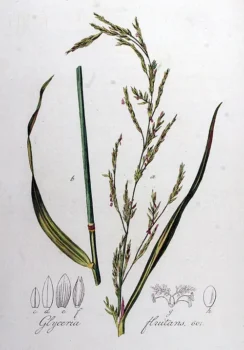
Water Mannagrass: A Wetland Grass for Soggy Spots
If you’ve got a persistently wet area in your garden that seems impossible to plant, water mannagrass (Glyceria fluitans) might just be the solution you’re looking for. This perennial grass thrives in conditions that would make most plants throw in the towel – namely, constantly soggy or even flooded soil.
What Is Water Mannagrass?
Water mannagrass is a perennial graminoid, meaning it’s part of the grass family and related plants. This graceful grass forms loose, open tufts and produces delicate, airy flower clusters that dance in the breeze. While it may not be the showiest plant in your garden, it brings a subtle elegance to waterlogged areas where few other plants can survive.
Where Does It Come From?
Here’s something important to know upfront: water mannagrass isn’t native to North America. Originally from Europe and Asia, this grass has been introduced and now reproduces on its own in the wild across Canada, the lower 48 states, Hawaii, and St. Pierre and Miquelon. You can find established populations in states including Arkansas, California, Hawaii, Idaho, Maryland, Massachusetts, New Jersey, New York, Pennsylvania, South Dakota, and Tennessee, as well as in Nova Scotia and Newfoundland.
- Species observed
- No observations
Should You Plant Water Mannagrass?
The decision to plant water mannagrass comes down to your specific needs and gardening philosophy. Since it’s non-native but not currently listed as invasive or noxious, it falls into a gray area that many gardeners navigate based on their personal preferences.
Reasons you might choose it:
- It thrives in extremely wet conditions where native options are limited
- Low maintenance once established
- Provides fine texture and movement in water gardens
- Useful for erosion control along waterways
Reasons you might skip it:
- It’s not native to North America
- Native alternatives may provide better wildlife benefits
- Potential to spread beyond intended areas
Native Alternatives to Consider
If you prefer to stick with native plants, consider these North American alternatives for wet areas:
- Fowl mannagrass (Glyceria striata)
- Northern mannagrass (Glyceria borealis)
- Wild rice (Zizania species)
- Bluejoint grass (Calamagrostis canadensis)
Growing Water Mannagrass Successfully
If you decide water mannagrass is right for your situation, here’s how to grow it successfully:
Hardiness: This tough grass grows in USDA zones 3-9, making it suitable for most temperate climates.
Light Requirements: Water mannagrass performs best in full sun but tolerates partial shade, especially in consistently moist conditions.
Soil and Water Needs: This is where water mannagrass really shines – it’s classified as an obligate wetland plant across all regions, meaning it almost always occurs in wetlands. It requires consistently moist to wet soil and can handle periodic flooding that would kill most other plants.
Planting Tips:
- Plant in spring after the last frost
- Space plants 12-18 inches apart
- Ensure the planting area stays consistently moist
- Consider planting near ponds, streams, or in rain gardens
Care and Maintenance:
- Very low maintenance once established
- No fertilizer needed in most situations
- Cut back in late winter or early spring if desired
- Monitor for spreading if planted near sensitive areas
Design Ideas and Uses
Water mannagrass works well in several landscape situations:
- Rain gardens and bioswales
- Pond and stream margins
- Naturalized wetland areas
- Erosion control on slopes near water
- Wildlife habitat restoration projects
Wildlife and Ecological Benefits
As a wind-pollinated grass, water mannagrass doesn’t provide significant nectar resources for pollinators. However, like most grasses, it can provide some habitat structure and potentially seed resources for birds, though native grasses typically offer superior wildlife benefits.
The Bottom Line
Water mannagrass fills a specific niche for gardeners dealing with persistently wet areas. While it’s not native to North America, it’s also not currently considered invasive. If you have a soggy spot that’s driving you crazy and native options aren’t readily available or suitable, water mannagrass could be a practical solution. Just remember to consider native alternatives first, and if you do plant it, keep an eye on its spread to ensure it stays where you want it.