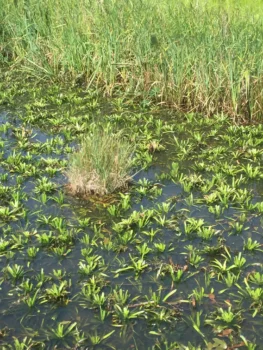
Water Soldiers: Why This Aquatic Plant Should Stay Out of Your Pond
If you’ve been browsing aquatic plants for your water garden and stumbled across water soldiers (Stratiotes aloides), you might be tempted by its striking sword-like leaves and charming white flowers. But before you add this European native to your shopping cart, there’s something important you need to know: this seemingly innocent aquatic plant is actually a problematic invader that’s banned in several states.
What Are Water Soldiers?
Water soldiers are floating aquatic plants that form distinctive rosettes of rigid, sword-shaped leaves. Think of them as the pineapple tops of the water world – they float at the surface with their spiky crowns above water and their roots dangling below. These herbaceous perennials produce small, three-petaled white flowers during summer, giving them an almost delicate appearance that belies their aggressive nature.
Where Do They Come From?
Originally from Europe and western Asia, water soldiers have found their way into North American waterways through the aquarium and water garden trade. While they might look right at home in a pond, they’re definitely not native to our continent.
The Problem with Water Soldiers
Here’s where things get serious. Water soldiers are considered highly problematic in several states:
- Michigan: Listed as Watch List, Prohibited
- Minnesota: Prohibited species
- Wisconsin: Prohibited species
- Alabama: Classified as Class C noxious weed
Why all the fuss? These plants are incredibly efficient at taking over water bodies. They reproduce rapidly through runners, forming dense mats that can crowd out native aquatic plants, reduce oxygen levels, and interfere with recreational activities like boating and swimming. Once established, they’re notoriously difficult to remove.
Growing Conditions (But Please Don’t!)
Water soldiers thrive in still or slow-moving freshwater bodies in USDA zones 5-9. They prefer full sun to partial shade and nutrient-rich water. The plants float freely, rising to the surface in spring and sinking to the bottom in fall – a clever survival strategy that makes them particularly hardy and persistent.
Better Alternatives for Your Water Garden
Instead of risking an ecological disaster, consider these native and non-invasive alternatives that offer similar aesthetic appeal:
- American lotus (Nelumbo lutea): Spectacular large leaves and fragrant yellow flowers
- Spatterdock (Nuphar advena): Heart-shaped floating leaves and bright yellow blooms
- Wild celery (Vallisneria americana): Grass-like submerged plant that provides excellent habitat
- Water lilies (Nymphaea species): Classic floating beauties available in native varieties
The Bottom Line
While water soldiers might catch your eye with their unique appearance, they’re simply too risky to introduce to North American waters. The potential for ecological damage far outweighs any aesthetic benefits they might provide. Stick with native alternatives that will give you the same visual impact without the environmental consequences.
Remember, responsible gardening means thinking beyond our own property lines. By choosing native and non-invasive plants, we can create beautiful water features while protecting our local ecosystems for future generations.