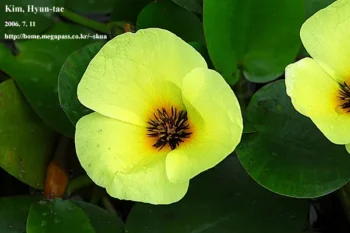
Waterpoppy: A Cheerful Aquatic Addition to Your Water Garden
If you’re looking to add a splash of sunshine to your pond or water feature, waterpoppy (Hydrocleys nymphoides) might just be the floating friend you’ve been searching for. This cheerful aquatic perennial brings bright yellow blooms and heart-shaped leaves to water gardens across the warmer regions of the United States.
What Makes Waterpoppy Special?
Waterpoppy is a delightful forb that lives its best life floating on the water’s surface. Unlike woody plants, this herbaceous perennial lacks significant woody tissue and instead focuses all its energy on producing those show-stopping yellow flowers that look remarkably like tiny poppies dancing on the water.
The three-petaled bright yellow blooms are the real stars of the show, rising above heart-shaped floating leaves that create an attractive carpet across your water feature. It’s like having a field of sunshine right in your backyard pond!
Where Does Waterpoppy Come From?
While waterpoppy has made itself at home in parts of the United States, it’s actually a South American native that originally hails from countries like Argentina, Brazil, Paraguay, and Uruguay. As a non-native species, it has established populations in Florida, Louisiana, Texas, and Puerto Rico, where it reproduces naturally in the wild.
- Species observed
- No observations
Is Waterpoppy Right for Your Garden?
Waterpoppy shines brightest in specific garden situations:
- Water gardens and ornamental ponds
- Aquatic landscapes with still or slow-moving water
- Bog gardens with consistent moisture
- Container water features
As an obligate wetland plant, waterpoppy absolutely must have wet conditions to thrive – it’s not just a preference, it’s a requirement! This makes it perfect for water features but completely unsuitable for traditional garden beds.
Growing Waterpoppy Successfully
Climate Requirements: Waterpoppy is happiest in USDA hardiness zones 8-11, where temperatures stay warm enough for this frost-sensitive beauty to flourish year-round.
Light and Water Needs: Give your waterpoppy full sun to partial shade and still or slow-moving freshwater. It’s quite adaptable to different water conditions as long as they’re consistently wet.
Planting Tips:
- Plant in containers and submerge 6-18 inches below the water surface
- Choose a spot with good light exposure for best flowering
- In cooler zones, consider bringing containers indoors for winter protection
Care and Maintenance: Waterpoppy is relatively low-maintenance once established. Regular deadheading of spent flowers will keep it looking tidy and may encourage more blooms. Keep an eye on its spread, as it can cover significant water surface area over time.
Benefits for Wildlife and Pollinators
Those bright yellow flowers aren’t just pretty – they’re also magnets for bees and other flying insects looking for nectar. While floating on your pond’s surface, waterpoppy creates habitat structure that can benefit aquatic ecosystems.
Consider Native Alternatives
While waterpoppy can be a lovely addition to water gardens, you might also consider native aquatic plants that provide similar benefits while supporting local ecosystems. Look into native water lilies, spatterdock, or other indigenous aquatic plants that are naturally adapted to your region’s conditions.
The Bottom Line
Waterpoppy offers a unique combination of cheerful blooms and attractive foliage for water gardeners in warmer climates. If you’re drawn to its sunny disposition and have the right aquatic conditions, it can make a delightful addition to your water feature. Just remember to plant responsibly and consider how it fits into your local ecosystem!