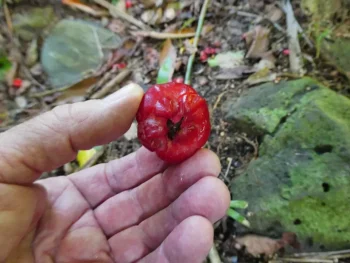
Watery Roseapple: A Tropical Treat for Your Garden
If you’ve ever wandered through a tropical garden and spotted a tree laden with unusual bell-shaped fruits that look like they’re straight out of a fairy tale, you might have encountered the watery roseapple (Syzygium aqueum). This intriguing tree brings both beauty and bounty to warm-climate gardens, though it’s not without its considerations for the thoughtful gardener.
What Exactly Is a Watery Roseapple?
The watery roseapple goes by its botanical name Syzygium aqueum, and you might also see it listed under its older scientific names like Eugenia aquea. Despite its name, this isn’t actually related to apples or roses – it’s a member of the myrtle family that just happens to produce fruits with a crisp, watery texture reminiscent of a mild apple.
Originally hailing from Southeast Asia, particularly Malaysia and Indonesia, this species has made its way around the tropical world. In the United States, you’ll find it growing in places like Guam and Palau, where it has established itself as a non-native species that reproduces on its own in the wild.
- Species observed
- No observations
Why You Might Fall for This Tropical Beauty
There’s plenty to love about the watery roseapple if you’re gardening in the right climate. Here’s what makes it special:
- Gorgeous flowers: The tree produces clusters of delicate, bell-shaped blooms in white to soft pink that are absolutely stunning
- Edible rewards: Those distinctive pear-shaped fruits aren’t just for show – they’re crisp, refreshing, and mildly sweet
- Glossy foliage: The evergreen leaves stay attractive year-round with their rich green color and glossy finish
- Pollinator magnet: Bees and other beneficial insects love those showy flowers
- Decent size: It makes an excellent specimen tree or shade provider without overwhelming smaller spaces
The Reality Check: Is This Tree Right for You?
Before you get too excited, let’s talk practicalities. The watery roseapple is definitely a warm-weather lover – we’re talking USDA zones 10-12 only. If you experience any frost where you live, this tree simply won’t survive outdoors year-round.
Since this is a non-native species that can spread on its own, it’s worth considering whether there might be native alternatives that could provide similar benefits while supporting local ecosystems. In tropical areas, native fruit trees or flowering species might be worth exploring first.
Growing Your Watery Roseapple Successfully
If you’ve decided this tree fits your garden goals and climate, here’s how to help it thrive:
Location and Soil
- Choose a spot with full sun to partial shade
- Ensure well-draining soil – waterlogged roots are a recipe for trouble
- Give it room to spread; these trees appreciate space
Watering and Care
- Keep soil consistently moist but not soggy
- Mulch around the base to retain moisture and suppress weeds
- Water deeply rather than frequently to encourage strong root development
Maintenance Tips
- Prune lightly to maintain shape and remove any dead or crossing branches
- Protect from strong winds, which can damage the branches
- Be patient – fruit production may take a few years to get going
The Bottom Line
The watery roseapple can be a delightful addition to the right garden – one that’s warm enough year-round and where the gardener appreciates both ornamental beauty and edible rewards. Its flowers will charm both you and local pollinators, while the fruits provide a unique taste experience.
Just remember to consider your local ecosystem and whether native alternatives might serve your garden goals equally well. If you do choose to plant one, source it responsibly and enjoy watching this tropical beauty settle into your landscape. Who knows? You might just discover your new favorite garden snack growing right outside your door.