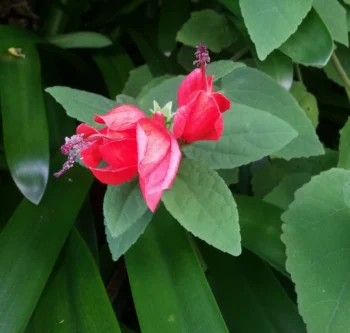
Wax Mallow: A Tropical Shrub That Hummingbirds Can’t Resist
Looking for a shrub that’ll have hummingbirds doing backflips in your garden? Meet the wax mallow (Malvaviscus arboreus var. arboreus), a charming tropical plant that’s basically a hummingbird magnet with its bright red, tube-shaped flowers. While this isn’t a native species in the United States, it’s found a comfortable home in warmer regions and has some interesting qualities worth considering.
What Is Wax Mallow?
Wax mallow is a perennial shrub that typically grows as a multi-stemmed woody plant, usually staying under 13-16 feet tall. What makes this plant quirky is that its bright red flowers never fully open – they stay in a perpetual bud-like state, which is actually part of their charm and evolutionary strategy for attracting long-beaked pollinators.
Originally native to Mexico and Central America, this plant has been introduced to several U.S. locations where it reproduces spontaneously and persists in the wild. You’ll find it growing in Florida, Hawaii, North Carolina, Puerto Rico, and the U.S. Virgin Islands.
- Species observed
- No observations
Garden Appeal and Landscape Role
The wax mallow brings tropical flair to any landscape with its heart-shaped leaves and vibrant red blooms that appear throughout much of the year in suitable climates. It works beautifully as:
- An ornamental accent shrub
- Part of a butterfly or hummingbird garden
- Informal hedge or border planting
- Tropical or subtropical landscape feature
The plant’s relaxed, somewhat sprawling growth habit makes it perfect for casual, naturalistic garden designs rather than formal landscapes.
Wildlife and Pollinator Benefits
Here’s where wax mallow really shines – it’s a fantastic pollinator plant. Those tubular red flowers are specifically designed to attract hummingbirds, and trust me, they deliver. Butterflies also appreciate the nectar-rich blooms. If you’re trying to create a wildlife-friendly space, this plant definitely pulls its weight.
Growing Conditions and Care
Wax mallow is refreshingly easy to grow, which is probably why it’s done so well as an introduced species. Here’s what it needs:
- Light: Full sun to partial shade (though more sun means more flowers)
- Soil: Well-draining soil; it’s not too picky about soil type
- Water: Moderate water needs; drought tolerant once established
- Climate: USDA hardiness zones 9-11
Planting and Maintenance Tips
Getting wax mallow established is straightforward. Plant it in spring after the last frost, give it regular water during its first growing season, then step back and let it do its thing. The plant benefits from occasional pruning to maintain shape and encourage bushier growth, but it’s not demanding about it.
One thing to keep in mind – since this is a non-native species, it may not provide the same ecological benefits as native plants for local wildlife beyond pollinator attraction.
Should You Plant Wax Mallow?
If you live in zones 9-11 and want a low-maintenance shrub that’ll attract hummingbirds, wax mallow could be a good choice for your garden. However, since it’s not native to the United States, you might also consider native alternatives that provide similar benefits while supporting local ecosystems more completely.
For hummingbird attraction, look into native options like coral honeysuckle, cardinal flower, or native salvias, depending on your region. These natives will not only attract hummingbirds but also support the full web of local wildlife, including native insects that many birds need to feed their young.
Ultimately, wax mallow is a perfectly pleasant plant that’s easy to grow and loved by hummingbirds. Just remember that incorporating native plants alongside any non-natives will give your local ecosystem the biggest boost.