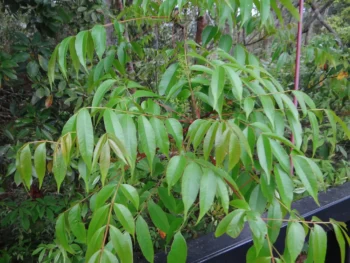
Wax Tree: A Beautiful but Dangerous Non-Native to Avoid in Your Garden
If you’ve ever encountered poison ivy and lived to tell the tale (with itchy memories), you’ll want to pay close attention to this plant profile. The wax tree, scientifically known as Toxicodendron succedaneum, might look like an attractive shade tree, but it’s basically poison ivy’s bigger, more dangerous cousin that can grow up to 60 feet tall. Yes, you read that right – a giant poison ivy tree!
What Exactly Is the Wax Tree?
The wax tree goes by the botanical name Toxicodendron succedaneum and was formerly classified as Rhus succedanea. This large deciduous tree is native to East Asia, particularly China, Japan, and Korea, where it has been used traditionally for producing wax and lacquer. While it might sound exotic and appealing, this tree brings some serious baggage to North American gardens.
The geographical distribution of this species spans across East Asia, where it naturally occurs in mountainous regions and has adapted to various soil conditions.
Why You Should Think Twice (or Thrice) Before Planting
Here’s where things get interesting – and by interesting, I mean potentially hospital-visit-worthy. The wax tree contains the same compound found in poison ivy: urushiol. This oily substance can cause severe allergic reactions, including painful rashes, blistering, and swelling. Unlike poison ivy, which you might accidentally brush against, this tree can affect you through:
- Direct contact with any part of the tree
- Smoke from burning the wood or leaves
- Handling tools that have touched the tree
- Even rainwater dripping from the leaves
Aesthetic Appeal (From a Safe Distance)
If we’re being honest, the wax tree does have some attractive qualities. It’s a large specimen that can reach 40-60 feet in height with a spreading canopy. The compound leaves turn brilliant shades of orange and red in fall, creating quite a spectacular display. Small, yellowish-green flowers appear in clusters during late spring, followed by small, waxy fruits.
Growing Conditions and Care
Should you choose to ignore all warnings (please don’t), the wax tree is surprisingly adaptable. It thrives in USDA hardiness zones 5-9 and tolerates:
- Full sun to partial shade
- Various soil types, as long as they’re well-drained
- Drought conditions once established
- Urban pollution
The tree grows at a moderate rate and requires minimal pruning. However, any maintenance work requires full protective gear and extreme caution.
Wildlife and Pollinator Considerations
The flowers do provide nectar for various insects, and birds may eat the small fruits. However, the risks to humans far outweigh these modest wildlife benefits, especially when there are many safer native alternatives available.
Better Native Alternatives
Instead of risking life and limb (literally) with a wax tree, consider these gorgeous native alternatives that offer similar benefits without the danger:
- Sugar Maple (Acer saccharum): Spectacular fall color and excellent shade
- Red Oak (Quercus rubra): Fast-growing with brilliant fall foliage
- American Sweetgum (Liquidambar styraciflua): Unique star-shaped leaves with amazing fall color
- Tulip Tree (Liriodendron tulipifera): Fast-growing native with interesting flowers
The Bottom Line
While the wax tree might catch your eye with its fall display, it’s simply not worth the risk for home gardeners. The potential for severe allergic reactions, combined with the availability of beautiful native alternatives, makes this an easy no for most landscapes. If you encounter one already growing on your property, consider having it professionally removed by experts equipped with proper protective gear.
Remember, the best garden is one where you can actually enjoy spending time without worry. Choose native alternatives that support local wildlife and keep your skin reaction-free!