Wayfaringtree: A Hardy European Shrub for Your Garden
Meet the wayfaringtree (Viburnum lantana), a robust deciduous shrub that has quietly made itself at home in gardens across North America. This European native might not have the flashiest name, but don’t let that fool you – this perennial powerhouse has been winning over gardeners with its reliable performance and understated charm.
What Exactly Is Wayfaringtree?
Wayfaringtree is a multi-stemmed shrub that typically reaches about 9 feet in both height and width at maturity. True to its shrubby nature, it develops several stems from the base, creating a full, rounded form that fits beautifully into many landscape designs. With its slow but steady growth rate, this isn’t a plant that will surprise you by suddenly taking over your garden – it’s more of a slow and steady wins the race type.
Where Does It Grow?
Originally from Europe, western Asia, and northwestern Africa, wayfaringtree has established itself across a surprising number of North American locations. You’ll find it growing in states from Maine to Montana, and even up into parts of Canada including New Brunswick, Ontario, and Quebec. It’s particularly common in the northeastern and midwestern United States.
- Species observed
- No observations
As a non-native species that reproduces on its own in the wild, wayfaringtree has proven quite adaptable to North American conditions. While it’s not considered invasive in most areas, it’s always worth checking with your local extension office about any regional concerns.
The Visual Appeal
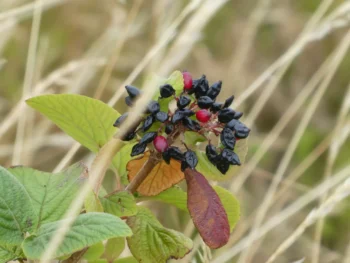
Wayfaringtree puts on quite a show throughout the growing season. In late spring, clusters of small white flowers create a frothy display that attracts bees and other pollinators. The coarse-textured, dark green foliage provides a solid backdrop through summer, then shifts to attractive reddish tones in fall. Come autumn, you’ll also notice clusters of black berries that persist into winter, adding visual interest when many other plants have gone dormant.
Garden Role and Design Uses
This versatile shrub works well in several landscape situations:
- As a specimen plant in mixed borders
- In naturalized woodland settings
- As an informal hedge or screen
- In cottage-style gardens
- For creating structure in perennial beds
Its moderate summer foliage density provides good screening during the growing season, while its winter porosity allows light through when deciduous plants go bare.
Growing Conditions and Hardiness
Wayfaringtree is remarkably adaptable and thrives in USDA hardiness zones 4-7, tolerating temperatures as low as -33°F. Here’s what this shrub prefers:
- Soil: Medium-textured, well-draining soils work best
- pH: Tolerates a range from 5.5 to 7.5
- Moisture: Prefers consistent moisture but not waterlogged conditions
- Light: Full sun to partial shade (though it’s somewhat shade intolerant)
- Fertility: Medium fertility requirements
One thing to note: this shrub has high moisture requirements and poor drought tolerance, so it’s not the best choice for xeric or water-wise gardens.
Planting and Care Tips
Getting wayfaringtree established is fairly straightforward:
- Planting: Available as container plants, bare root, or grown from cuttings
- Spacing: Allow 6-8 feet between plants for proper mature spacing
- Watering: Maintain consistent moisture, especially during establishment
- Mulching: Apply 2-3 inches of organic mulch around the base
- Pruning: Prune immediately after flowering if needed, though it typically maintains good form naturally
- Cold stratification: Seeds require cold treatment for germination
Wildlife and Pollinator Benefits
The white flower clusters bloom in late spring, providing nectar for various pollinators including bees, flies, and other beneficial insects. The black berries that follow may attract birds, though the plant doesn’t have extensive wildlife benefits compared to some native alternatives.
Should You Plant Wayfaringtree?
Wayfaringtree can be a reliable, low-maintenance addition to gardens where its growing requirements match site conditions. It’s particularly useful in areas that need a medium-sized shrub with seasonal interest and pollinator appeal. However, since it’s not native to North America, consider these excellent native alternatives that provide similar benefits:
- American Elder (Sambucus canadensis)
- Nannyberry (Viburnum lentago)
- Blackhaw (Viburnum prunifolium)
- Maple-leaved Viburnum (Viburnum acerifolium)
These native viburnums and related species offer comparable ornamental value while providing superior wildlife habitat and supporting local ecosystems. Whatever you choose, you’ll be adding structure, seasonal beauty, and pollinator support to your garden landscape.