Weeping Alkaligrass: A Hardy but Non-Native Grass Worth Understanding
If you’ve ever wandered through a salty marsh, roadside ditch, or disturbed wetland area, chances are you’ve encountered weeping alkaligrass (Puccinellia distans) without even knowing it. This unassuming perennial grass has quietly made itself at home across much of North America, though it’s not actually native to our continent.
What Exactly is Weeping Alkaligrass?
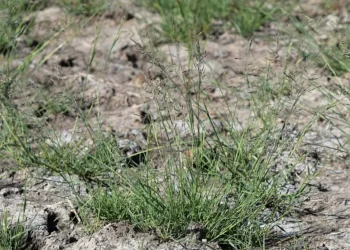
Weeping alkaligrass is a low-growing perennial grass that belongs to the same family as many of our familiar lawn and pasture grasses. As a graminoid (grass-like plant), it forms spreading mats and has that characteristic grass appearance with narrow leaves and inconspicuous flowers. Don’t let the weeping in its name fool you – this grass isn’t particularly droopy or dramatic looking. It’s more of a quiet, practical plant that gets the job done.
Where You’ll Find It
This grass has an impressive geographic distribution across North America, showing up in states and provinces from Alaska to Arizona, and from Newfoundland to California. It’s established itself in wetlands, along roadsides, in disturbed soils, and pretty much anywhere conditions are tough enough to discourage more finicky plants.
- Species observed
- No observations
However, it’s important to know that weeping alkaligrass is not native to North America. It originally hails from Europe and western Asia and has been introduced to our continent, where it now reproduces and persists on its own in the wild across Canada, Greenland, and many parts of the United States.
The Salt Tolerance Superpower
What makes weeping alkaligrass particularly noteworthy is its exceptional tolerance for salty conditions. Its wetland status varies by region – in some areas it’s considered an obligate wetland plant (almost always found in wetlands), while in others it’s facultative (usually in wetlands but can handle drier spots too). This flexibility is part of what makes it so successful in harsh environments where other plants struggle.
Should You Plant Weeping Alkaligrass?
Here’s where things get interesting. While weeping alkaligrass isn’t considered invasive or noxious, and it’s certainly not going to take over your garden, there are some important considerations:
- It’s not particularly ornamental – think function over beauty
- As a non-native species, it doesn’t provide the same ecological benefits as native grasses
- It’s typically found in disturbed or harsh conditions rather than designed landscapes
- Wind-pollinated grasses like this one don’t offer much for pollinators
Better Native Alternatives
If you’re looking for salt-tolerant or wetland grasses for your landscape, consider these native options instead:
- Saltgrass (Distichlis spicata) for extreme salt tolerance
- Prairie cordgrass (Spartina pectinata) for wetland areas
- Alkali sacaton (Sporobolus airoides) for alkaline soils
- Blue grama (Bouteloua gracilis) for tough, dry conditions
Growing Conditions and Care
If you do encounter weeping alkaligrass or find yourself needing to manage it, here’s what you should know about its preferences:
- Thrives in full sun conditions
- Prefers moist to wet soils but can handle some drought
- Extremely tolerant of salt and alkaline conditions
- Hardy across USDA zones 3-9
- Low maintenance once established
- Spreads by both seeds and underground stems
The Bottom Line
Weeping alkaligrass is one of those plants that’s more important to recognize and understand than to actively cultivate. While it serves a purpose in harsh environments and isn’t causing ecological harm, there are native grasses that can fill similar roles while providing better support for local wildlife and ecosystems. If you’re planning a landscape, especially one designed to support native biodiversity, stick with indigenous grass species that have co-evolved with your local environment.
Think of weeping alkaligrass as nature’s practical solution to tough conditions – effective, but not necessarily the most exciting choice for your garden design dreams.