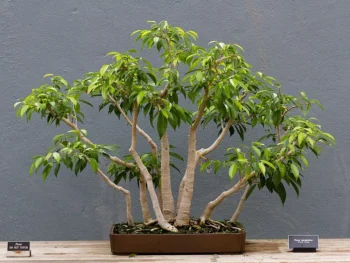
Weeping Fig: A Graceful Non-Native Addition to Your Garden
If you’re looking for an elegant tree with drooping branches and glossy green leaves, the weeping fig (Ficus benjamina) might catch your eye. This non-native beauty has found its way into many American gardens, particularly in warmer climates. But before you plant one, let’s explore what makes this tree tick and whether it’s the right choice for your landscape.
What is a Weeping Fig?
The weeping fig, scientifically known as Ficus benjamina, goes by several names and even has a synonym, Ficus nitida. This perennial shrub typically grows as a multi-stemmed woody plant, usually staying under 13 to 16 feet tall, though it can grow taller or develop a single trunk under the right conditions.
Originally from India and Southeast Asia, this tree has made itself at home in parts of the United States, particularly Florida and Puerto Rico, where it reproduces on its own in the wild. Its graceful, drooping branches and glossy oval leaves create that distinctive weeping appearance that gives the tree its common name.
- Species observed
- No observations
The Good, The Bad, and The Beautiful
Let’s be honest – the weeping fig has some serious aesthetic appeal. Those glossy green leaves and elegant, drooping branches create a sophisticated look that works well in urban landscapes, courtyards, and even as a large houseplant. The smooth, light gray bark adds another layer of visual interest.
However, since this is a non-native species that has established itself in the wild, it’s worth considering native alternatives that could provide similar benefits while supporting local ecosystems. Native trees often offer better wildlife benefits and are naturally adapted to your local climate.
Growing Conditions and Care
If you do decide to grow a weeping fig, here’s what you need to know:
- Climate: Best suited for USDA hardiness zones 9-12, where temperatures rarely dip below 25°F
- Sunlight: Thrives in full sun to partial shade
- Soil: Prefers well-draining soil but is fairly adaptable
- Water: Regular watering during establishment, then quite drought tolerant
- Cold sensitivity: Protect from frost and strong winds
Planting and Maintenance Tips
Spring is your best bet for planting a weeping fig. During the first year, keep the soil consistently moist to help establish the root system. Once established, these trees are surprisingly low-maintenance and drought tolerant.
Regular pruning helps maintain the tree’s shape and prevents it from getting too unruly. The weeping fig responds well to pruning, so don’t be afraid to trim it back if needed.
Wildlife and Pollinator Considerations
While weeping figs do produce small figs that can attract some birds and insects, they’re not considered major contributors to pollinator support. If supporting local wildlife is a priority for your garden, native alternatives might be a better choice.
The Bottom Line
The weeping fig is an attractive, relatively low-maintenance tree that works well in warm climates and urban settings. While it’s not native to the United States, it’s also not currently listed as invasive in most areas. If you choose to plant one, you’ll get an elegant addition to your landscape that’s fairly forgiving and adaptable.
However, consider exploring native alternatives that might provide similar aesthetic appeal while offering better support for local wildlife and ecosystems. Your local native plant society or extension office can help you identify native trees with similar characteristics that are perfectly suited to your specific region.