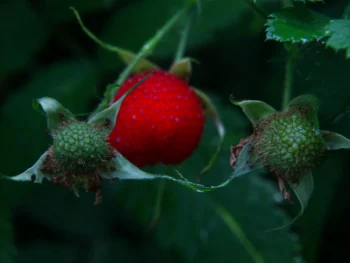
West Indian Raspberry: A Sweet Addition to Tropical Gardens
If you’ve been searching for an easy-to-grow fruiting plant for your warm-climate garden, you might want to consider the West Indian raspberry (Rubus rosifolius). This low-growing shrub brings both beauty and bounty to landscapes in Hawaii and Puerto Rico, though it comes with a few considerations worth knowing about.
What is West Indian Raspberry?
West Indian raspberry is a perennial shrub that stays refreshingly compact, typically growing under 1.5 feet tall and never exceeding 3 feet at maturity. Despite its common name suggesting Caribbean origins, this plant is actually native to Asia and has been introduced to tropical regions where it now thrives and reproduces on its own.
You might also encounter this plant listed under its synonym Rubus rosaefolius, but don’t let the slight spelling variation confuse you – it’s the same delightful little shrub.
Where Does It Grow?
Currently, West Indian raspberry has established itself in Hawaii and Puerto Rico, where it grows both in cultivation and in the wild. The plant has adapted well to these tropical environments, reproducing spontaneously without human intervention.
- Species observed
- No observations
Garden Appeal and Landscape Role
This charming shrub offers several appealing qualities for gardeners:
- Produces small, edible red berries that are sweet and flavorful
- Features delicate white flowers that attract pollinators like bees
- Maintains a tidy, low-growing habit perfect for ground cover
- Works well in informal garden settings and food forests
- Adapts to various landscape styles, from naturalized areas to edible landscaping projects
Growing Conditions and Care
One of the most appealing aspects of West Indian raspberry is its adaptability. This resilient plant thrives in USDA hardiness zones 8-11, making it perfect for warm climates. It’s quite flexible about its growing conditions, tolerating both partial shade and full sun situations.
The plant shows interesting wetland preferences depending on location. In Caribbean regions, it’s equally comfortable in wet or dry conditions, while in Hawaii, it tends to prefer drier, upland areas but can still handle some moisture.
Planting and Maintenance Tips
Getting started with West Indian raspberry is refreshingly straightforward:
- Plant in well-draining soil, though it adapts to various soil types
- Provide regular watering during the establishment period
- Choose a spot with partial shade to full sun exposure
- Allow space for natural spreading, as the plant can expand via runners
- Minimal pruning required due to its naturally compact growth habit
Things to Consider
While West Indian raspberry can be a delightful addition to appropriate gardens, it’s worth noting that this is a non-native species that has naturalized in its current range. If you’re focused on supporting native ecosystems, you might want to consider indigenous fruiting alternatives that provide similar benefits while supporting local wildlife.
For Hawaiian gardeners, native options like ‘ōhelo (Vaccinium reticulatum) or pōhuehue (Ipomoea pes-caprae) could provide interesting alternatives. Puerto Rican gardeners might explore native options suitable to their specific growing conditions.
The Bottom Line
West Indian raspberry offers an easy entry into edible landscaping for tropical gardeners. Its compact size, sweet berries, and pollinator-friendly flowers make it an attractive choice for informal gardens and food forest projects. While it’s not native to its current range, it’s also not considered problematic, making it a reasonable choice for gardeners who appreciate its unique qualities.
Whether you choose to grow this adaptable little shrub or explore native alternatives, the key is selecting plants that match both your gardening goals and your local ecosystem’s needs.