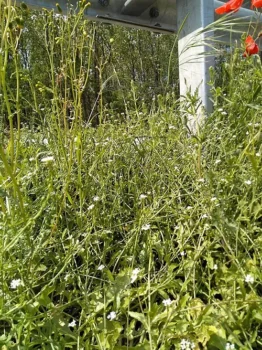
White Ballmustard: A Non-Native Plant You’ll Want to Know About
If you’ve spotted small white flowers clustered along roadsides or in disturbed areas across Maryland, North Carolina, or Virginia, you might have encountered white ballmustard (Calepina irregularis). This unassuming little plant has an interesting story to tell, though it’s probably not one you’ll want starring in your garden beds.
What Exactly Is White Ballmustard?
White ballmustard is a non-native annual or biennial forb that originally hails from the Mediterranean region and parts of Europe. Like many members of the mustard family, it’s found its way across the ocean and now reproduces on its own in the wild across several mid-Atlantic states. You might also see it listed under its synonym Myagrum irregulare in older botanical references.
As a forb, this plant lacks the woody stems you’d find on shrubs or trees. Instead, it’s got that soft, herbaceous growth that’s typical of many wildflowers and weeds. It completes its life cycle in one or two years, depending on growing conditions.
Where You’ll Find It Growing
Currently, white ballmustard has established itself in Maryland, North Carolina, and Virginia. It tends to pop up in disturbed soils, along roadsides, and in waste areas where other plants might struggle to get established.
- Species observed
- No observations
Should You Plant White Ballmustard?
Here’s where things get interesting – while white ballmustard isn’t considered invasive or noxious (at least not officially), it’s also not exactly garden material. Its small white flowers, while delicate, don’t pack much visual punch, and the plant tends to have a weedy appearance that most gardeners try to avoid.
Since it’s non-native and doesn’t offer significant benefits to local wildlife or pollinators, you’re probably better off choosing native alternatives that will support your local ecosystem while providing more ornamental value.
Better Native Alternatives
Instead of white ballmustard, consider these native options that offer similar or better characteristics:
- Wild bergamot – Attracts pollinators and has lovely purple flowers
- White wild indigo – Beautiful white flower spikes and supports native butterflies
- Partridge pea – Cheerful yellow flowers and important for native bees
- Wild columbine – Delicate flowers that hummingbirds adore
Growing Conditions and Care
If you’re simply trying to identify white ballmustard or understand why it’s growing somewhere on your property, it typically thrives in:
- Disturbed or compacted soils
- Areas with inconsistent moisture
- Full sun to partial shade
- USDA hardiness zones 6-9
The plant is pretty adaptable and doesn’t require much care – which is exactly why it can establish itself so readily in less-than-ideal growing conditions.
The Bottom Line
While white ballmustard isn’t going to cause ecological disaster, it’s not going to win any garden beauty contests either. Your garden space is valuable real estate, so why not fill it with native plants that will support local wildlife, look fantastic, and connect you to your region’s natural heritage?
If you discover white ballmustard growing wild on your property, there’s no need to panic – just consider it a reminder to plant something more beneficial in its place when you get the chance!