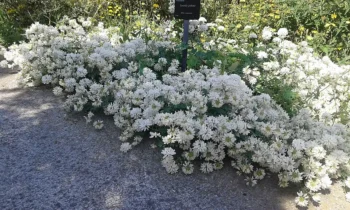
White Crownvetch: A Rare Non-Native Perennial with Limited Garden Presence
If you’ve stumbled across the name white crownvetch (Securigera globosa) in your plant research, you’re looking at quite the botanical mystery! This lesser-known perennial forb has managed to establish itself in parts of New York, but don’t expect to find it at your local nursery anytime soon.
What Exactly Is White Crownvetch?
White crownvetch belongs to the legume family and is classified as a forb – basically a soft-stemmed herbaceous plant that lacks the woody tissue you’d find in shrubs or trees. As a perennial, it comes back year after year, though its presence in North American gardens is practically non-existent.
You might also see this plant listed under its scientific synonym, Coronilla globosa, in older botanical references. But regardless of what name you use, you’re talking about the same elusive species.
Where Does It Come From and Where Can You Find It?
This isn’t a native North American plant – it’s an introduced species that somehow made its way to our shores and decided to call New York home. While its exact native range isn’t well-documented in available sources, it’s established itself and reproduces on its own in the wild, at least in the Empire State.
- Species observed
- No observations
Should You Plant White Crownvetch?
Here’s where things get interesting (and a bit frustrating for curious gardeners). The honest truth is that there’s precious little information available about growing Securigera globosa in cultivation. We don’t know:
- Its preferred growing conditions
- USDA hardiness zones
- Mature size or growth rate
- Specific care requirements
- Whether it has any invasive tendencies
This lack of information, combined with its extremely limited distribution, suggests it’s not commonly cultivated or readily available through typical horticultural channels.
Consider Native Alternatives Instead
Since white crownvetch is non-native and information about its garden performance is scarce, you might want to consider native alternatives that offer similar benefits. If you’re drawn to legumes for their nitrogen-fixing abilities and pollinator appeal, consider these native options:
- Wild bergamot (Monarda fistulosa)
- Purple prairie clover (Dalea purpurea)
- White wild indigo (Amorpha alba)
- Canada milk vetch (Astragalus canadensis)
The Bottom Line
White crownvetch remains something of an enigma in the gardening world. While it’s established itself in New York and appears to be surviving on its own, the lack of cultivation information and extremely limited availability make it an impractical choice for most gardeners.
If you’re interested in adding leguminous plants to your landscape, you’ll have much better luck (and more detailed growing information) with well-documented native species that support local ecosystems and are readily available from reputable nurseries.
Sometimes the most responsible gardening choice is to stick with plants we understand well – and in the case of white crownvetch, that understanding is pretty limited!