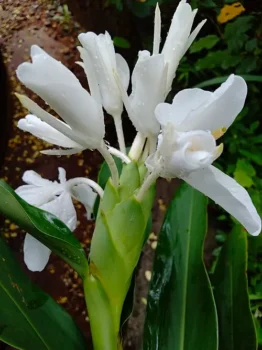
White Garland-Lily: A Fragrant Beauty for Water Gardens
If you’ve ever caught a whiff of an intensely sweet, almost intoxicating floral fragrance on a warm evening, you might have encountered the white garland-lily (Hedychium coronarium). This striking perennial brings a touch of tropical elegance to gardens with its butterfly-like white blooms and lush green foliage.
What is White Garland-Lily?
White garland-lily is a herbaceous perennial that grows from underground rhizomes. Despite its common name suggesting it’s a lily, this beauty actually belongs to the ginger family. It’s a non-native species that has established itself in several warm regions across the United States.
As a forb, this plant lacks woody stems but makes up for it with its impressive presence in the garden. The fragrant white flowers bloom in clusters and are particularly aromatic in the evening, making them perfect for patios and outdoor entertaining spaces.
Where Does It Grow?
Originally from India and the Himalayas, white garland-lily has found new homes in warmer parts of the United States. You’ll find it growing in Florida, Georgia, Hawaii, Louisiana, as well as in Guam, Palau, and Puerto Rico. It thrives in these warm, humid climates where it can grow year-round.
- Species observed
- No observations
Why Consider (or Not Consider) White Garland-Lily?
Reasons you might love it:
- Incredibly fragrant flowers that perfume evening air
- Striking white blooms with an exotic, butterfly-like appearance
- Thrives in wet conditions where many plants struggle
- Attracts butterflies and night-flying pollinators
- Low maintenance once established
Things to consider:
- As a non-native species, it doesn’t support local ecosystems as well as native plants
- Requires consistently moist conditions
- Limited to warm climates (zones 8b-11)
- Can spread via rhizomes and may need management
Growing Conditions and Care
White garland-lily is happiest when its feet are wet! This plant loves moist to wet soil conditions, making it perfect for:
- Water garden margins
- Bog gardens
- Areas with poor drainage
- Near ponds or water features
It performs well in both partial shade and full sun, though some afternoon shade is appreciated in the hottest climates. High humidity is essential for optimal growth and flowering.
Planting and Care Tips
Planting: Plant rhizomes in spring after the last frost. Choose a location that stays consistently moist and dig the planting area to incorporate organic matter.
Ongoing Care:
- Keep soil consistently moist to wet
- Mulch around plants to retain moisture and suppress weeds
- In cooler zones (8b-9), apply thick mulch in winter for protection
- Divide clumps every 2-3 years to maintain vigor
- Remove spent flowers to encourage continued blooming
Hardiness: White garland-lily is hardy in USDA zones 8b through 11. In cooler areas, you can grow it as an annual or in containers that can be brought indoors.
Wildlife and Pollinator Benefits
The sweet-scented flowers attract butterflies during the day and moths at night. However, as a non-native plant, it provides limited benefits to local wildlife compared to indigenous species that have co-evolved with native insects and animals.
Native Alternatives to Consider
If you’re looking to support local ecosystems while still enjoying fragrant, water-loving plants, consider these native alternatives:
- Sweetbay magnolia (Magnolia virginiana) – fragrant white flowers
- Swamp rose (Rosa palustris) – pink fragrant blooms
- Wild ginger species native to your region
- Native iris species for wet areas
The Bottom Line
White garland-lily can be a stunning addition to water gardens and tropical landscapes, especially if you’re drawn to intensely fragrant flowers. While it’s not native, it’s not considered problematic in most areas where it grows. If you choose to plant it, enjoy its exotic beauty while also incorporating native plants elsewhere in your landscape to support local wildlife. Remember, the most successful gardens are those that work with their local climate and conditions – and this tropical beauty certainly knows how to make the most of warm, wet spots!