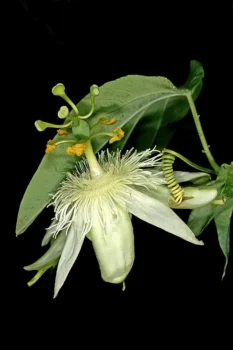
White Passionflower: A Delicate Climbing Beauty for Warm Gardens
If you’re drawn to delicate white blooms and graceful climbing vines, the white passionflower (Passiflora subpeltata) might catch your gardening eye. This perennial climbing vine brings a touch of tropical elegance to warm-climate gardens, though there are some important considerations before adding it to your landscape.
What is White Passionflower?
White passionflower is a herbaceous perennial vine that belongs to the passion vine family. Unlike its woody cousins, this plant lacks significant woody tissue and maintains its soft, green stems throughout its life. The plant produces small, intricate white flowers that showcase the classic passionflower structure with its distinctive corona of delicate filaments.
Native Status and Distribution
Here’s something important to know upfront: white passionflower isn’t native to North America. Originally from tropical regions of the Americas, this species has been introduced to Hawaii, where it now reproduces on its own in the wild. Currently, it’s found growing in Hawaiian landscapes, typically in non-wetland areas though it can occasionally appear in wetter spots.
- Species observed
- No observations
Since this plant is non-native, consider exploring native alternatives that provide similar aesthetic appeal while supporting local ecosystems. Native passion vines like Passiflora lutea (yellow passionflower) might offer comparable beauty with greater ecological benefits.
Garden Appeal and Design Role
White passionflower brings several appealing qualities to the garden:
- Delicate white flowers that add subtle elegance
- Climbing habit perfect for trellises, fences, or arbors
- Can serve as ground cover if not provided with vertical support
- Attracts pollinators like butterflies and bees
- Suitable for tropical and subtropical garden themes
Where Does It Thrive?
This vine is best suited for:
- USDA hardiness zones 9-11
- Tropical and subtropical gardens
- Container gardens in cooler climates (bring indoors for winter)
- Areas with protection from strong winds
- Gardens with adequate vertical growing space
Growing Conditions
White passionflower prefers:
- Well-drained soil that doesn’t stay waterlogged
- Full sun to partial shade (morning sun with afternoon shade works well)
- Regular watering during growing season
- Protection from frost and freezing temperatures
- Some support structure for climbing
Planting and Care Tips
Successfully growing white passionflower involves these key practices:
- Plant after last frost date in spring
- Provide a trellis, fence, or other support structure
- Water regularly but ensure good drainage
- Prune as needed to control size and shape
- In cooler zones, grow in containers and move indoors for winter
- Watch for typical vine pests like aphids or spider mites
Wildlife and Pollinator Benefits
The flowers of white passionflower do provide nectar for butterflies and bees, contributing some pollinator support to your garden. However, since it’s not native, it won’t provide the same level of ecosystem support as indigenous plants that have co-evolved with local wildlife.
Should You Plant It?
White passionflower can be a lovely addition to warm-climate gardens, especially if you’re creating a tropical theme or need a delicate climbing vine. However, as a non-native species, consider balancing your plant choices with native alternatives that provide greater ecological benefits. If you do choose to grow it, enjoy its subtle beauty while being mindful of its non-native status and potential to spread beyond your garden boundaries.
Whether you choose white passionflower or explore native alternatives, the key is creating a garden that brings you joy while supporting the broader ecosystem around you.