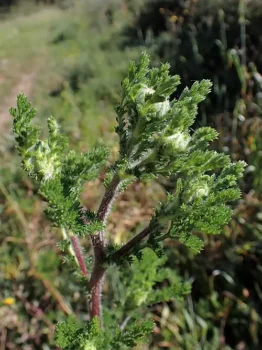
Whitebuttons (Anacyclus clavatus): A Mediterranean Charmer for Your Garden
If you’re looking for a cheerful, low-maintenance annual that brings a touch of Mediterranean charm to your garden, whitebuttons might just catch your eye. This petite flowering plant creates carpets of small, daisy-like blooms that can brighten up challenging spots in your landscape.
What Are Whitebuttons?
Whitebuttons (Anacyclus clavatus) is an annual forb that belongs to the daisy family. Don’t let the technical term forb intimidate you – it simply means this is a non-woody flowering plant that completes its life cycle in one growing season. The plant produces clusters of small white flowers with sunny yellow centers, creating a delightful carpet effect when grown in groups.
Origins and Current Range
Originally hailing from the Mediterranean region, particularly North Africa and southern Europe, whitebuttons has found its way to North America as an introduced species. In the United States, it has established itself and currently grows wild in Pennsylvania, where it reproduces on its own without human intervention.
- Species observed
- No observations
Garden Appeal and Design Role
What makes whitebuttons appealing to gardeners is its ability to create dense, flowering ground cover in areas where other plants might struggle. The small, abundant blooms create a cottage garden feel and work beautifully as:
- Edge plantings along pathways
- Rock garden specimens
- Container garden fillers
- Ground cover for sunny slopes
Ideal Growing Conditions
Whitebuttons thrives in conditions that mimic its Mediterranean homeland. It performs best in USDA hardiness zones 7-10 and prefers:
- Full sun exposure: At least 6-8 hours of direct sunlight daily
- Well-draining soil: Avoid areas that stay wet or soggy
- Low to moderate water: Drought tolerant once established
- Poor to average soil: Actually performs better in less fertile conditions
Growing and Care Tips
One of whitebuttons’ most endearing qualities is its ease of cultivation. Here’s how to grow it successfully:
- Starting from seed: Direct sow in spring after the last frost, or start indoors 4-6 weeks earlier
- Spacing: Plant seeds about 6-8 inches apart to allow for spreading
- Watering: Water regularly until established, then reduce to occasional deep watering
- Maintenance: Deadhead spent flowers to encourage continued blooming throughout the season
Benefits to Pollinators
The small, accessible flowers of whitebuttons attract various beneficial insects, including small bees and other pollinators. While not a powerhouse pollinator plant, it does contribute to supporting local pollinator populations, especially in urban or challenging growing environments.
Should You Plant Whitebuttons?
As a non-native species, whitebuttons presents both opportunities and considerations for gardeners. On the positive side, it’s easy to grow, drought tolerant, and provides season-long color in difficult spots. However, if you’re focused on supporting native ecosystems, you might consider these native alternatives that offer similar benefits:
- Native asters for fall blooming ground cover
- Wild bergamot for fragrant, pollinator-friendly flowers
- Local native sedums for rock garden applications
Ultimately, whitebuttons can be a valuable addition to gardens where its specific growing requirements match your site conditions, especially in Mediterranean-style landscapes or challenging urban environments. Just remember that supporting native plants whenever possible helps strengthen local ecosystems and provides the best habitat for native wildlife.
The Bottom Line
Whitebuttons offers gardeners a reliable, low-maintenance option for adding season-long color to sunny, well-drained locations. While it may not be native to North America, its ease of cultivation and drought tolerance make it a practical choice for specific garden situations. Whether you choose to include it in your landscape or opt for native alternatives, the key is selecting plants that thrive in your specific growing conditions while supporting your garden’s overall goals.