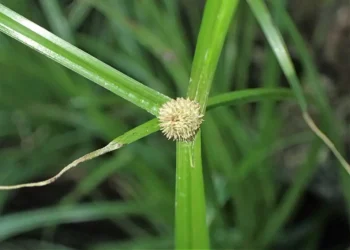
Whitehead Spikesedge: A Non-Native Sedge You Might Encounter
If you’ve spotted small, white globe-shaped flowers popping up in grassy areas across Hawaii, Puerto Rico, or other Pacific islands, you’ve likely encountered whitehead spikesedge (Kyllinga nemoralis). This unassuming little sedge has quietly made itself at home in these tropical locations, though it’s originally from much farther away.
What Exactly is Whitehead Spikesedge?
Whitehead spikesedge is a perennial sedge that belongs to the same family as other grass-like plants including rushes and true sedges. Don’t let the grass-like description fool you though – this is definitely not your typical lawn grass! Like other members of the sedge family (Cyperaceae), it has that distinctive triangular stem that botanists love to point out.
You might also see this plant listed under its synonym Cyperus kyllingia, which can make plant identification a bit confusing for us regular folks.
Where Does It Come From and Where Can You Find It?
Here’s where things get interesting – whitehead spikesedge isn’t actually native to the places where you’re most likely to encounter it today. This little wanderer originally hails from tropical regions of Africa and Asia, but has established itself as a naturalized resident in Hawaii, Guam, Palau, and Puerto Rico.
- Species observed
- No observations
In these locations, it reproduces on its own and has become part of the local flora, even though it needed human help to get there initially.
Should You Plant Whitehead Spikesedge in Your Garden?
This is where we need to have an honest conversation. While whitehead spikesedge isn’t officially listed as invasive or noxious, it’s also not going to win any beauty contests in your garden. Here’s what you should know:
The Not-So-Great News
- Limited ornamental value – those white flower heads are pretty small
- Can be an aggressive spreader once established
- Tends to show up in areas where you might not want it
- Offers minimal benefits to local wildlife and pollinators
Growing Conditions and Care
If you do encounter this plant or decide to work with it, here’s what it prefers:
- Climate: Thrives in USDA hardiness zones 9b-11 (tropical and subtropical areas)
- Sunlight: Adapts to full sun or partial shade
- Moisture: Quite adaptable – can handle both wet and dry conditions depending on the region
- Soil: Not particularly picky about soil type
- Maintenance: Very low maintenance once established (perhaps too low maintenance!)
Wetland Considerations
Interestingly, whitehead spikesedge has different moisture preferences depending on where it’s growing. In Caribbean regions, it typically stays in upland areas and rarely ventures into wetlands. However, in Hawaii, it’s more flexible and can pop up in both wet and dry locations.
Better Native Alternatives
Instead of planting whitehead spikesedge, consider these native sedge alternatives that will better support your local ecosystem:
- Look for native Cyperus species in your region
- Research indigenous sedges that provide food and habitat for local wildlife
- Consult with local native plant societies for the best options in your specific area
The Bottom Line
While whitehead spikesedge isn’t inherently bad, it’s also not particularly exciting from a gardening perspective. If you’re looking to create a beautiful, ecologically beneficial landscape, you’re probably better off choosing native plants that will support local wildlife and pollinators while adding genuine aesthetic value to your space.
If you do spot this plant growing wild in your area, now you’ll know what you’re looking at – just another example of how plants can travel the world and make new homes for themselves!