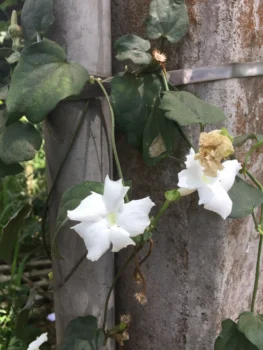
Whitelady Vine: A Fragrant Climbing Beauty for Warm Gardens
If you’re searching for a climbing vine that brings both visual appeal and delightful fragrance to your garden, you might want to get acquainted with the whitelady vine. This perennial climber, scientifically known as Thunbergia fragrans, offers gardeners in warm climates an interesting option for vertical gardening and landscape design.
What is Whitelady Vine?
Whitelady vine is a twining, climbing plant that can develop relatively long stems that may be either woody or herbaceous depending on growing conditions. This perennial produces charming white, tubular flowers that release a pleasant fragrance, making it a sensory delight in any garden setting.
You might also encounter this plant listed under its botanical synonym, Thunbergia volubilis, in some gardening references or nursery catalogs.
Native Status and Distribution
It’s important to note that whitelady vine is not native to the United States. Originally from India and tropical Asia, this species has been introduced and now reproduces spontaneously in the wild in several U.S. locations, including Hawaii, Florida, Puerto Rico, and the U.S. Virgin Islands, where it has established self-sustaining populations.
- Species observed
- No observations
Should You Grow Whitelady Vine?
The decision to grow whitelady vine comes with considerations. On the positive side, this plant offers:
- Beautiful, fragrant white flowers that attract pollinators like butterflies and moths
- Year-round interest in warm climates with sporadic blooming
- Versatile growth habit suitable for trellises, fences, or ground cover
- Relatively easy care requirements
However, since it’s a non-native species that has established wild populations, gardeners might consider exploring native climbing alternatives that provide similar benefits while supporting local ecosystems. Native options could include native honeysuckles, wild grapes, or other indigenous climbing plants suitable for your specific region.
Growing Conditions and Care
If you decide to grow whitelady vine, here’s what you need to know about keeping it happy:
Climate Requirements
This tropical beauty thrives in USDA hardiness zones 9-11. In cooler regions, you can grow it as an annual or bring container plants indoors during winter months.
Light and Soil
Whitelady vine performs best in full sun to partial shade conditions. It prefers well-draining soil but isn’t particularly fussy about soil type, adapting to various conditions once established.
Watering
Provide regular watering, especially during dry periods, but avoid waterlogged conditions which can lead to root problems.
Planting and Maintenance Tips
- Support structures: Since this is a climbing vine, provide sturdy trellises, fences, or other support structures for optimal growth
- Pruning: Regular pruning helps control growth and maintain shape, especially important given the plant’s vigorous nature
- Container growing: Works well in large containers, making it suitable for patios or areas where you want to control its spread
- Monitoring: Keep an eye on its growth to prevent it from overwhelming other plants or spreading beyond intended areas
Garden Design Applications
Whitelady vine works well in several landscape scenarios:
- Covering unsightly fences or walls
- Creating privacy screens on trellises
- Adding vertical interest to tropical or subtropical garden designs
- Providing fragrant elements near seating areas or windows
The Bottom Line
Whitelady vine can be an attractive addition to warm-climate gardens, offering fragrant flowers and easy-care climbing habit. However, as responsible gardeners, it’s worth considering whether native alternatives might better serve both your landscape goals and local ecosystem health. If you do choose to grow this non-native species, proper care and containment will help you enjoy its benefits while being a conscientious gardener.