Whitetop (Cardaria draba): Why This Invasive Plant Should Stay Out of Your Garden
If you’ve spotted clusters of tiny white flowers blanketing roadsides and disturbed areas, you’ve likely encountered whitetop (Cardaria draba). While these blooms might look charming at first glance, this non-native perennial is actually a problematic invader that gardeners should definitely avoid planting.
What Is Whitetop?
Whitetop, also known by its botanical name Cardaria draba, is a perennial forb that belongs to the mustard family. This herbaceous plant lacks woody tissue and produces new growth from buds at or below ground level each year. You might also see it listed under its former scientific names, including Lepidium draba.
Where Does Whitetop Come From and Where Is It Now?
Originally native to the Mediterranean region and parts of Europe and Asia, whitetop has unfortunately made itself at home across North America. This aggressive spreader now grows wild in nearly every U.S. state and most Canadian provinces, from Alberta to Wyoming, and everywhere in between.
- Species observed
- No observations
Why Whitetop Is a Garden No-No
Here’s the thing about whitetop – it might look innocent with its delicate white flower clusters, but this plant is a certified troublemaker. It’s classified as a noxious weed in Alaska with Prohibited status, meaning it’s considered seriously harmful to the environment and agriculture.
This perennial spreads aggressively through both seeds and underground root systems, quickly forming dense patches that crowd out native plants. Once established, it’s incredibly difficult to remove and can take over large areas in just a few growing seasons.
What Whitetop Looks Like
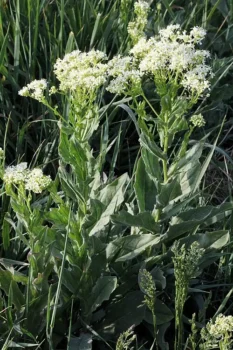
Whitetop produces small, four-petaled white flowers arranged in dense, flat-topped clusters. The heart-shaped leaves are bluish-green, and the plant typically grows 1-2 feet tall. While the flowers might attract some pollinators, the environmental damage this plant causes far outweighs any minor benefits.
Growing Conditions (But Please Don’t!)
Part of what makes whitetop so problematic is its adaptability. This hardy perennial thrives in USDA zones 3-9 and tolerates:
- Various soil types, from sandy to clay
- Drought conditions once established
- Full sun to partial shade
- Disturbed soils and poor growing conditions
This adaptability is exactly why it spreads so easily and why responsible gardeners should steer clear.
Better Alternatives for Your Garden
Instead of risking an invasion of whitetop, consider these native alternatives that offer similar white flowers without the environmental headache:
- Wild bergamot (Monarda fistulosa) – attracts beneficial insects
- White wild indigo (Amorpha alba) – supports native pollinators
- Pearly everlasting (Anaphalis margaritacea) – provides texture and color
- White prairie aster (Symphyotrichum ericoides) – late-season blooms
If You Already Have Whitetop
Spotted whitetop in your garden or property? Early intervention is key. Remove small infestations by digging up the entire root system before the plant flowers and sets seed. For larger areas, you may need to consult with local extension services or land management professionals for appropriate control methods.
The Bottom Line
While whitetop might seem like an easy-care perennial with pretty flowers, its invasive nature makes it a poor choice for responsible gardeners. Instead, invest your time and energy in native plants that support local ecosystems while giving you the beautiful garden displays you’re after. Your local wildlife – and your neighbors – will thank you for it!