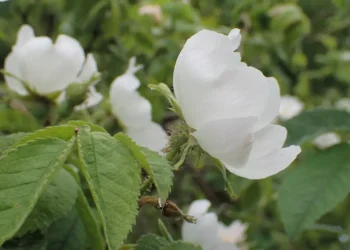
Whitewoolly Rose: A European Beauty in North American Gardens
Meet the whitewoolly rose (Rosa tomentosa), a charming European shrub that has quietly made itself at home in scattered locations across North America. With its distinctively fuzzy, grayish-green foliage and delicate pink to white blooms, this rose brings a touch of Old World charm to gardens—though it might not be the best choice for every native plant enthusiast.
What Makes the Whitewoolly Rose Special?
The whitewoolly rose gets its common name from the soft, woolly texture of its leaves, which are covered in fine hairs that give them a silvery-green appearance. This perennial shrub stays relatively compact, typically growing as a low shrub under 1.5 feet tall, though it can occasionally reach up to 3 feet at maturity. During summer, it produces fragrant flowers ranging from pink to white, followed by attractive red to orange rose hips that add autumn interest.
Where Does It Grow?
Originally native to the mountainous regions of central and southern Europe, Rosa tomentosa has established itself as a non-native species in parts of North America. You can find it growing wild in Prince Edward Island, New York, North Carolina, Tennessee, Texas, and Vermont, where it reproduces spontaneously without human intervention.
- Species observed
- No observations
Should You Plant Whitewoolly Rose?
Here’s where things get interesting. While Rosa tomentosa isn’t considered invasive or noxious, it’s also not native to North America. If you’re committed to native-only gardening, this probably isn’t your rose. However, if you appreciate diverse garden plantings and are drawn to its unique woolly foliage and fragrant blooms, it can be a lovely addition to the right setting.
Consider these factors before planting:
- It’s well-suited for cottage gardens and naturalized landscapes
- The flowers attract bees, butterflies, and other pollinators
- Rose hips provide food for birds and visual interest
- It’s quite hardy, thriving in USDA zones 3-7
Native Alternatives to Consider
If you love the idea of a native rose with similar charm, consider these North American alternatives:
- Wild rose (Rosa woodsii) – offers similar compact growth and wildlife benefits
- Prairie rose (Rosa arkansana) – another low-growing native with pink flowers
- Virginia rose (Rosa virginiana) – provides excellent fall color and winter interest
Growing Whitewoolly Rose Successfully
If you decide to grow Rosa tomentosa, you’ll find it refreshingly low-maintenance. This tough little shrub adapts well to various conditions and doesn’t demand constant attention.
Ideal Growing Conditions:
- Full sun to partial shade
- Well-draining soil (tolerates poor soils)
- Drought-tolerant once established
- Hardy in zones 3-7
Planting and Care Tips:
- Plant in spring or fall when temperatures are moderate
- Water regularly during the first growing season to establish roots
- Once established, it requires minimal watering
- Prune lightly after flowering if desired, though it’s not necessary
- Leave rose hips on the plant for winter wildlife food and visual interest
The Bottom Line
Rosa tomentosa is a perfectly pleasant garden plant—hardy, fragrant, and attractive to pollinators. While it won’t support native ecosystems the way indigenous roses do, it’s not causing ecological harm either. If you’re creating a diverse garden that welcomes both native and well-behaved non-native plants, the whitewoolly rose could earn a spot. Just remember to give native alternatives a look first—you might find they offer everything you love about this European charmer, plus the added benefit of supporting local wildlife in ways only native plants can.