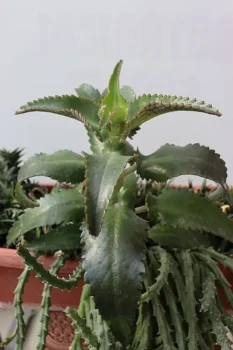
Widow’s-Thrill (Kalanchoe): A Colorful Non-Native Succulent for Warm Climate Gardens
Looking for a low-maintenance succulent that brings vibrant color to your garden? Meet widow’s-thrill, scientifically known as Kalanchoe. This charming succulent has made itself at home in warm regions across the United States, though it’s not originally from here. Let’s explore whether this eye-catching plant deserves a spot in your landscape.
What is Widow’s-Thrill?
Widow’s-thrill is a perennial forb herb – essentially a non-woody plant that comes back year after year. Unlike trees or shrubs, it lacks significant woody tissue and keeps its growing points at or near ground level. This succulent is beloved for its thick, fleshy leaves and clusters of small, tubular flowers that come in vibrant shades of red, orange, yellow, and pink.
Native Status and Geographic Distribution
Here’s something important to know: widow’s-thrill isn’t native to North America. Originally from Madagascar and tropical Africa, this plant is considered non-native throughout the United States. It has established itself and reproduces naturally in several warm regions, including Florida, Hawaii, Texas, Puerto Rico, the U.S. Virgin Islands, and various Pacific territories.
- Species observed
- No observations
While it’s not considered invasive in most areas, it’s worth noting that this plant can spread and persist on its own once established.
Why Consider (or Not Consider) Widow’s-Thrill?
Widow’s-thrill offers several appealing qualities for gardeners in warm climates:
- Extremely low maintenance once established
- Drought tolerant, perfect for water-wise gardening
- Provides long-lasting, colorful blooms
- Excellent for rock gardens and containers
- Thrives in poor soils where other plants struggle
However, since it’s non-native, you might want to consider native alternatives that provide similar benefits while supporting local ecosystems. Native succulents and drought-tolerant plants can offer the same low-maintenance appeal while benefiting local wildlife.
Growing Conditions and Care
If you decide to grow widow’s-thrill, you’re in for a treat – it’s remarkably easy to care for:
- Sunlight: Full sun to partial shade
- Soil: Well-draining soil is essential; it tolerates poor, sandy soils
- Water: Very drought tolerant once established; water sparingly
- USDA Hardiness Zones: 9-11 (not frost tolerant)
Planting and Care Tips
Growing widow’s-thrill successfully is straightforward:
- Plant in well-draining soil – this is crucial for preventing root rot
- Space plants adequately for air circulation
- Water deeply but infrequently; allow soil to dry between waterings
- Protect from frost in borderline zones or grow in containers that can be moved indoors
- Deadhead spent flowers to encourage continued blooming
- Divide clumps every few years to maintain vigor
Landscape Uses
Widow’s-thrill works beautifully in several garden settings:
- Rock gardens and xeriscapes
- Container gardens and hanging baskets
- Ground cover in warm, dry areas
- Border plantings in desert-style landscapes
- Indoor houseplant in bright locations
Wildlife and Pollinator Considerations
While widow’s-thrill does produce flowers that may attract some pollinators, it doesn’t provide the specialized benefits that native plants offer to local wildlife. If supporting native ecosystems is a priority, consider researching native succulents or drought-tolerant plants in your area that can provide similar aesthetic appeal while benefiting local birds, butterflies, and other wildlife.
The Bottom Line
Widow’s-thrill is an undeniably attractive and easy-to-grow succulent that can add vibrant color to warm-climate gardens. While it’s not native to North America, it’s not considered problematically invasive in most areas where it grows. If you choose to plant it, you’ll enjoy a low-maintenance addition to your garden that thrives in conditions where many other plants would struggle. Just remember to consider native alternatives that might provide similar benefits while supporting your local ecosystem.