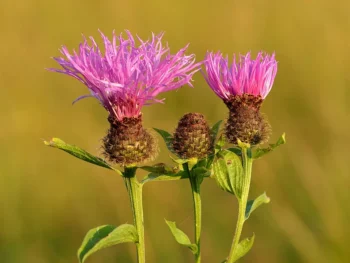
Wig Knapweed: A Quirky European Wildflower for Your Garden
If you’ve ever wondered about a wildflower that looks like it’s having a perpetual bad hair day, let me introduce you to wig knapweed (Centaurea phrygia). This perennial European native has earned its amusing common name from the distinctive fringed bracts surrounding its purple-pink flowers that really do resemble an untidy wig!
What Exactly Is Wig Knapweed?
Wig knapweed is a perennial forb—basically a non-woody flowering plant—that belongs to the sunflower family. Originally hailing from Europe and western Asia, this hardy character has made itself at home in parts of North America, particularly in New York, Ohio, and Vermont. You might also see it listed under its synonym, Centaurea austriaca.
Where You’ll Find It Growing Wild
In the United States, wig knapweed has established populations in the northeastern region, specifically in New York, Ohio, and Vermont. As a non-native species, it reproduces on its own in the wild without human assistance and tends to persist once established.
- Species observed
- No observations
The Appeal of Wig Knapweed
What makes this plant interesting to gardeners? Here are a few compelling reasons:
- Unique thistle-like flowers with characteristic wispy bracts that bloom from June through September
- Purple-pink blooms that add color to late summer gardens
- Excellent pollinator magnet, attracting bees, butterflies, and other beneficial insects
- Low-maintenance perennial that’s quite drought tolerant once established
- Adaptable to various growing conditions
Growing Conditions and Care
Wig knapweed is refreshingly easy-going when it comes to growing requirements:
- Light: Full sun to partial shade
- Soil: Adaptable to various soil types
- Water: Drought tolerant once established
- Hardiness: Suitable for USDA zones 3-8
- Maintenance: Very low maintenance
Where It Fits in Your Landscape
Wig knapweed works beautifully in:
- Wildflower meadows and naturalized areas
- Cottage garden settings
- Pollinator gardens
- Areas where you want a wild look with minimal maintenance
Planting and Care Tips
Growing wig knapweed is straightforward:
- Plant in spring or fall
- Space plants adequately as they can spread via underground rhizomes
- Water regularly until established, then it becomes quite drought tolerant
- Deadhead spent flowers to prevent excessive self-seeding if desired
- Be aware that it can self-seed readily and spread naturally
A Word About Alternatives
While wig knapweed can be an attractive addition to informal gardens, gardeners interested in supporting local ecosystems might consider native alternatives that provide similar benefits. Native wildflowers like wild bergamot (Monarda fistulosa), purple coneflower (Echinacea purpurea), or native asters can offer comparable pollinator benefits while supporting local wildlife that has co-evolved with these plants.
The Bottom Line
Wig knapweed is an interesting choice for gardeners who appreciate unusual wildflowers and want to create pollinator-friendly spaces with minimal effort. Its quirky appearance and easy-care nature make it suitable for casual, naturalized gardens. Just keep in mind its spreading tendencies and consider whether native alternatives might better serve your local ecosystem’s needs. Either way, you’ll have a conversation starter that’s sure to make visitors do a double-take!