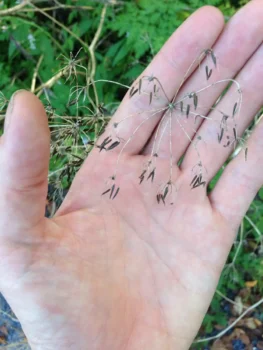
Wild Chervil: A Pretty but Problematic Non-Native Plant
Wild chervil (Anthriscus sylvestris) might catch your eye with its delicate, lacy white flowers and feathery foliage, but before you consider adding this European native to your garden, there are some important things you need to know. This seemingly innocent plant has earned a reputation as an aggressive spreader that can quickly outcompete native species.
What is Wild Chervil?
Wild chervil is a non-native forb that belongs to the carrot family. This annual to biennial plant lacks woody tissue and produces delicate, umbrella-shaped clusters of small white flowers that bloom in late spring and early summer. The plant can grow quite tall, reaching 3-5 feet in height, with fern-like leaves that give it an attractive, delicate appearance.
You might also see this plant referenced by its botanical synonyms, including Chaerophyllum sylvestre, though Anthriscus sylvestris remains the accepted scientific name.
Where Does Wild Chervil Grow?
Originally from Europe, western Asia, and North Africa, wild chervil has established itself across much of North America. You can find it growing in British Columbia, New Brunswick, Nova Scotia, Ontario, Quebec, Newfoundland, and numerous U.S. states including Connecticut, Idaho, Illinois, Maine, Maryland, Massachusetts, Michigan, Minnesota, New Jersey, New York, North Carolina, Ohio, Oregon, Pennsylvania, Rhode Island, Tennessee, Vermont, Virginia, Washington, and Wisconsin.
- Species observed
- No observations
The Problem with Wild Chervil
Here’s where things get concerning: Wild chervil has invasive status in several areas. It’s listed as Prohibited in at least one jurisdiction and Prohibited/Restricted in Wisconsin. This means the plant is considered harmful to local ecosystems and native plant communities.
As a non-native species that reproduces spontaneously and persists without human help, wild chervil can quickly spread and establish dense populations that crowd out native plants. This aggressive behavior makes it a poor choice for responsible gardeners who want to support local wildlife and maintain ecological balance.
Why You Should Skip Wild Chervil
While wild chervil does attract some pollinators like bees, flies, and beetles with its umbrella-shaped flower clusters, the ecological costs outweigh these limited benefits. Here’s why we recommend avoiding this plant:
- It’s classified as invasive in multiple areas
- It can rapidly colonize areas and outcompete native species
- It self-seeds prolifically, making it difficult to control once established
- Native alternatives provide better support for local wildlife
Better Native Alternatives
Instead of wild chervil, consider these native alternatives that offer similar aesthetic appeal while supporting local ecosystems:
- Wild bergamot (Monarda fistulosa) – offers attractive flowers and excellent pollinator support
- Queen Anne’s lace (Daucus carota) – provides similar umbrella-shaped flowers (though this is also technically non-native, it’s less aggressive)
- Native asters and goldenrods – excellent for late-season pollinator support
- Wild columbine (Aquilegia canadensis) – delicate, attractive flowers perfect for woodland gardens
If You Encounter Wild Chervil
If you spot wild chervil growing on your property, consider removing it before it spreads further. The plant typically grows in partial shade to full sun and tolerates various soil conditions, making it adaptable to many garden situations – which unfortunately also makes it more likely to establish and spread.
When removing wild chervil, be sure to dispose of plant material properly (don’t compost it) and monitor the area for new growth, as seeds may already be present in the soil.
The Bottom Line
While wild chervil might seem like an attractive addition to cottage gardens or naturalized areas, its invasive tendencies make it a plant to avoid. As responsible gardeners, we can make better choices by selecting native plants that provide beauty, support local wildlife, and maintain the health of our local ecosystems. Your garden – and your local environment – will thank you for it!