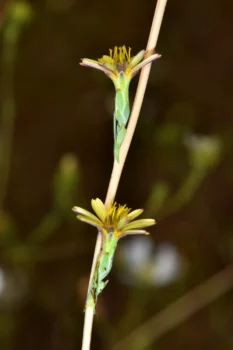
Willowleaf Lettuce: A Hardy Wild Edible for Naturalized Gardens
If you’re looking for a low-maintenance plant that thrives in tough conditions, willowleaf lettuce (Lactuca saligna) might catch your attention. This slender annual or biennial herb has made itself at home across much of North America, despite its European origins. But before you decide whether to welcome it into your garden, let’s explore what makes this plant tick and whether it deserves a spot in your landscape.
What Is Willowleaf Lettuce?
Willowleaf lettuce gets its name from its narrow, elongated leaves that somewhat resemble those of a willow tree. As a forb—basically a non-woody plant that dies back to the ground—it can complete its life cycle in one year (annual) or spread it across two growing seasons (biennial). The plant produces small, yellow, dandelion-like flowers arranged in loose, airy clusters that give it a delicate appearance despite its tough nature.
Don’t expect to find this plant listed in your grandmother’s seed catalogs under common names—willowleaf lettuce keeps things simple with just one widely recognized moniker, though botanists sometimes refer to varieties like Lactuca saligna var. runcinata.
Where Does It Grow?
Originally from Europe and Asia, willowleaf lettuce has become quite the traveler. Today, you can find it established across a impressive range of North American locations, including Alabama, Arizona, Arkansas, California, Delaware, Georgia, Illinois, Indiana, Iowa, Kansas, Kentucky, Louisiana, Maryland, Michigan, Missouri, Nebraska, Nevada, New Jersey, New Mexico, New York, North Carolina, Ohio, Oklahoma, Oregon, Pennsylvania, South Carolina, Tennessee, Texas, Virginia, Washington, West Virginia, Wisconsin, and even parts of Canada including Ontario and Quebec.
- Species observed
- No observations
Garden Role and Aesthetic Appeal
Willowleaf lettuce won’t win any beauty contests, but it has its own understated charm. The plant typically grows with a narrow, upright form that works well in naturalized areas or wild gardens. Its small yellow flowers, while not showy, create a subtle backdrop and add texture to informal plantings. Think of it as the supporting actor rather than the leading star in your garden drama.
This plant works best in:
- Wild or naturalized garden areas
- Disturbed soil rehabilitation projects
- Low-maintenance landscape borders
- Areas where you want self-seeding plants
Growing Conditions and Care
One of willowleaf lettuce’s strongest selling points is its adaptability. This plant thrives in USDA hardiness zones 3-9, making it suitable for most North American gardens. It’s particularly happy in full sun to partial shade and isn’t picky about soil quality—in fact, it often performs better in poor, well-draining soils than in rich garden beds.
The plant’s wetland status varies by region, but generally prefers upland conditions. In most areas, it’s classified as facultative upland, meaning it usually grows in non-wetland areas but can tolerate some moisture. Only in the most arid regions and eastern mountains does it strictly avoid wet conditions.
Care requirements are refreshingly minimal:
- Plant in well-draining soil
- Provide full sun to partial shade
- Water sparingly once established
- Allow to self-seed for naturalized plantings
- No fertilization needed
Wildlife and Pollinator Benefits
While willowleaf lettuce may not be a pollinator magnet like native wildflowers, its small composite flowers do provide nectar for various insects, including bees, flies, and small butterflies. The plant’s ability to bloom over an extended period can offer a modest but consistent food source when other flowers are scarce.
Should You Plant Willowleaf Lettuce?
Here’s where things get interesting. Willowleaf lettuce is what botanists call a naturalized plant—it’s not native to North America, but it’s established itself here and reproduces without human help. It’s not currently listed as invasive or noxious, which means it’s not considered a major ecological threat.
However, as a non-native species, it doesn’t provide the same ecological benefits as native plants. If you’re focused on supporting local ecosystems and wildlife, you might want to consider native alternatives instead.
Consider willowleaf lettuce if you:
- Need a low-maintenance plant for challenging conditions
- Want to experiment with wild edibles (young leaves are reportedly edible)
- Have disturbed areas that need quick ground cover
- Enjoy naturalized, informal garden styles
Consider native alternatives if you:
- Prioritize supporting local ecosystems
- Want plants with stronger wildlife benefits
- Prefer garden plants with more ornamental value
- Are creating habitat gardens for native species
Native Alternatives to Consider
If willowleaf lettuce’s tough-as-nails attitude appeals to you but you’d prefer native options, consider wild lettuce species native to your region, native asters for similar flower structure, or other native forbs that thrive in poor soils and provide better wildlife support.
The bottom line? Willowleaf lettuce is a perfectly acceptable choice for low-maintenance, naturalized plantings, especially in challenging growing conditions. Just remember that choosing native species when possible helps create stronger, more resilient local ecosystems—and often provides better long-term garden performance too.