Willowleaf Meadowsweet: A Hardy Shrub for Wet Spots
If you’ve got a soggy corner of your yard that seems impossible to plant, willowleaf meadowsweet (Spiraea salicifolia) might just be your new best friend. This resilient perennial shrub thrives where many other plants fear to tread – in consistently moist to downright wet conditions.
What Is Willowleaf Meadowsweet?
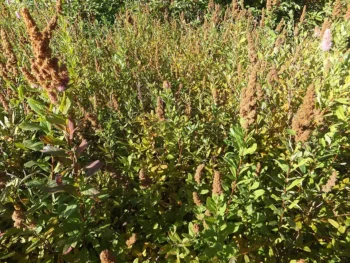
Willowleaf meadowsweet is a multi-stemmed woody shrub that typically reaches 4-5 meters (13-16 feet) in height, though it can grow taller under ideal conditions. True to its name, this plant sports narrow, willow-like leaves that give it an elegant, graceful appearance throughout the growing season.
During summer, the shrub puts on quite a show with dense clusters of small white to pale pink flowers arranged in terminal panicles. These blooms not only add beauty to the landscape but also serve as valuable nectar sources for bees, butterflies, and other pollinators.
Where Does It Grow?
Originally native to Europe and Asia, willowleaf meadowsweet has established itself as a naturalized plant in several U.S. states and parts of Canada. You can find it growing wild in Ontario, Georgia, Kentucky, Michigan, Mississippi, North Carolina, Vermont, and Virginia. The plant reproduces on its own in these areas and has adapted well to North American conditions.
- Species observed
- No observations
The Wet Spot Specialist
Here’s where willowleaf meadowsweet really shines – it absolutely loves water. Depending on your region, this plant ranges from facultative wetland (meaning it usually grows in wetlands but can handle drier spots) to obligate wetland (almost always found in wet areas). In the Northcentral and Northeast regions, it’s particularly tied to consistently moist conditions.
This makes it an excellent choice for:
- Rain gardens and bioswales
- Pond or stream margins
- Low-lying areas that stay soggy
- Naturalized wetland gardens
Should You Plant It?
While willowleaf meadowsweet isn’t native to North America, it’s not considered invasive either – it’s more of a well-behaved naturalized resident. If you’re looking for a tough, water-loving shrub that can handle challenging conditions, it’s certainly an option worth considering.
However, if you prefer to stick with native plants (and we always encourage that!), consider these native alternatives that love wet feet just as much:
- Native spirea species like Spiraea tomentosa (steeplebush)
- Elderberry (Sambucus canadensis)
- Buttonbush (Cephalanthus occidentalis)
- Red-osier dogwood (Cornus sericea)
Growing Willowleaf Meadowsweet
If you decide to give willowleaf meadowsweet a try, you’ll find it refreshingly easy to grow. Hardy in USDA zones 3-7, this tough shrub can handle cold winters and appreciates the consistent moisture that many gardeners struggle to provide.
Ideal Growing Conditions
- Sunlight: Full sun to partial shade
- Soil: Moist to wet, tolerates poor drainage
- Water: Consistent moisture is key – this isn’t a drought-tolerant plant
- pH: Adaptable to various soil pH levels
Planting and Care Tips
Plant willowleaf meadowsweet in spring after the last frost. Choose a location that stays consistently moist – think of those spots where other shrubs might develop root rot, and you’ve found the perfect home for this water-lover.
Once established, maintenance is minimal. The shrub benefits from occasional pruning after flowering to maintain shape and encourage bushier growth. Remove any dead or damaged branches as needed.
The key to success? Don’t let it dry out. If you’re planting it away from a naturally wet area, be prepared to provide supplemental watering during dry spells.
A Pollinator-Friendly Choice
One of the best reasons to consider willowleaf meadowsweet is its value to pollinators. The summer blooms provide nectar for bees and butterflies when many other plants are past their flowering peak. It’s a reliable mid-season pollinator plant that fills an important gap in the garden’s bloom schedule.
The Bottom Line
Willowleaf meadowsweet might not be a native plant, but it’s found its niche as a useful, non-invasive addition to challenging wet sites. If you’ve got a soggy spot that needs some vertical interest and summer blooms, it’s worth considering – just remember to explore native alternatives first. Either way, you’ll be creating habitat for pollinators and solving one of gardening’s trickiest challenges: what to plant in the wet spots!