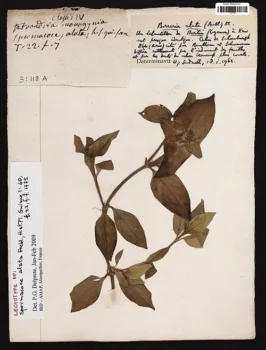
Winged False Buttonweed: A Plant to Avoid in Your Garden
If you’ve stumbled across the name winged false buttonweed while researching plants for your garden, we need to have a heart-to-heart chat. While this herbaceous plant might sound intriguing, Spermacoce alata is actually one of those plants that falls squarely into the thanks, but no thanks category for home gardeners.
What Is Winged False Buttonweed?
Winged false buttonweed is a forb – essentially a soft-stemmed, non-woody herbaceous plant that lacks the thick, woody growth you’d see in shrubs or trees. You might also encounter this plant listed under its botanical synonym, Borreria alata, in older gardening resources or scientific literature.
This plant produces small flowers and has adapted to thrive in various conditions, which might sound like a gardener’s dream. However, that adaptability is precisely what makes it problematic.
Why You Should Skip This Plant
Here’s the crucial information every gardener needs to know: winged false buttonweed is classified as a noxious weed in the United States. This official designation isn’t handed out lightly – it means this plant poses a genuine threat to local ecosystems, agriculture, or native plant communities.
When a plant earns the noxious label, it typically means:
- It spreads aggressively and outcompetes native plants
- It can be difficult or expensive to control once established
- It may cause economic or environmental harm
- It has limited natural predators in non-native environments
Geographic Concerns
While the exact native range and current distribution of winged false buttonweed requires further clarification, its noxious status in the United States suggests it has already proven problematic in various regions.
Better Alternatives for Your Garden
Instead of risking the introduction of a noxious species, consider these approaches:
- Choose native alternatives that provide similar aesthetic appeal without the ecological risks
- Consult with your local native plant society or extension office for region-specific recommendations
- Focus on plants that support local pollinators and wildlife
- Select species that are well-adapted to your local climate and soil conditions
What to Do If You Encounter It
If you suspect you have winged false buttonweed growing on your property, don’t panic, but do take action:
- Contact your local extension office or department of agriculture for identification confirmation
- Follow their guidance for safe and effective removal
- Never compost or dispose of plant material where it might spread
- Consider professional help for large infestations
The Bottom Line
While every plant has its place in the world’s ecosystems, winged false buttonweed simply isn’t suited for intentional cultivation in home gardens. Its noxious status serves as an important warning that this species can cause more harm than good when introduced to new environments.
The best approach? Skip this one entirely and invest your gardening energy in plants that will beautify your space while supporting local ecosystems. Your garden – and your local environment – will thank you for making the responsible choice.