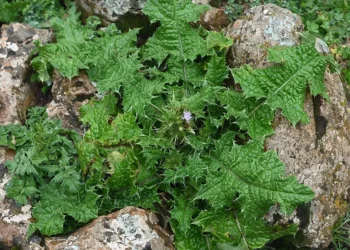
Winged Plumeless Thistle: What Every Gardener Should Know
If you’ve encountered a spiky, purple-flowered plant with distinctively winged stems in your garden or local area, you might be looking at winged plumeless thistle (Carduus tenuiflorus). This annual thistle has quite a story to tell, and understanding its characteristics can help you make informed decisions about your garden.
Getting to Know Winged Plumeless Thistle
Winged plumeless thistle is an annual forb – essentially an herbaceous flowering plant without woody stems. What makes this thistle distinctive are its characteristic winged stems and small purple-pink flower heads. As the name suggests, unlike some of its thistle cousins, this species lacks the fluffy plumes (pappus) that help seeds drift on the wind.
Where You’ll Find It
Originally hailing from the Mediterranean region, Europe, and North Africa, this thistle has made itself at home in several U.S. states. Currently, you can find established populations in California, New Jersey, Oregon, Pennsylvania, Texas, and Washington. As a non-native species that reproduces without human assistance, it has adapted well to various American landscapes.
- Species observed
- No observations
Should You Grow It?
Here’s where things get interesting. While winged plumeless thistle does offer some benefits – its flowers can attract bees and butterflies – most gardeners probably don’t want to intentionally invite this plant into their space. Here’s why:
- It’s quite weedy in nature and prefers disturbed ground
- The spiny stems and leaves make it less than garden-friendly
- It can spread readily once established
- It’s better suited to wild spaces than cultivated gardens
Native Alternatives to Consider
If you’re drawn to the purple blooms and wildlife benefits that thistles can provide, consider these native alternatives instead:
- Field thistle (Cirsium discolor) – offers similar wildlife benefits
- Tall thistle (Cirsium altissimum) – attracts beneficial insects
- Purple prairie clover (Dalea purpurea) – provides purple blooms without the spines
Growing Conditions and Care
If you do encounter winged plumeless thistle or are researching it for educational purposes, here’s what you should know about its preferences:
- Sun requirements: Full sun
- Soil tolerance: Adaptable to poor soils and drought conditions
- USDA zones: Can grow as an annual in zones 6-10
- Water needs: Drought tolerant once established
Management Tips
If winged plumeless thistle appears uninvited in your garden, early intervention is key. Since it’s an annual, preventing seed production by removing plants before they flower can help control populations. Hand-pulling when the soil is moist makes removal easier, but watch out for those spines!
The Bottom Line
While winged plumeless thistle has adapted successfully to life in North America and does provide some wildlife benefits, it’s generally not a plant most gardeners want to cultivate intentionally. Its weedy nature and aggressive growth habit make it better suited to wild spaces than garden beds. If you’re looking for purple blooms and pollinator appeal, native alternatives will give you the beauty without the potential headaches.
Remember, the best gardens work with nature rather than against it, and choosing plants that belong in your local ecosystem is always the most sustainable approach.