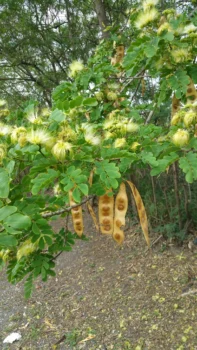
Woman’s Tongue Tree: A Tropical Shade Giant Worth Knowing
If you’ve ever heard an unusual rattling sound coming from a large tree on a breezy day, you might have encountered the woman’s tongue tree (Albizia lebbeck). This distinctive tropical tree gets its quirky common name from the way its flat seed pods chatter and rattle in the wind – though it’s also known by the more dignified name of siris tree.
What Exactly is Woman’s Tongue?
Woman’s tongue is a large perennial tree that can grow well over 13-16 feet in height, developing a broad, umbrella-shaped canopy that provides excellent shade. As a member of the legume family, this tree produces clusters of fragrant white to pale yellow flowers that bloom in spherical, puff-like clusters, followed by those famous rattling seed pods.
Where Does It Grow?
Originally native to tropical Asia, including India and Myanmar, woman’s tongue has established itself as a non-native species across warmer regions of the United States. You’ll find it growing in California, Florida, Hawaii, Texas, as well as in Guam, Palau, Puerto Rico, and the U.S. Virgin Islands. The tree reproduces spontaneously in the wild and has persisted in these areas without human intervention.
- Species observed
- No observations
Why Consider (or Not Consider) Planting Woman’s Tongue?
There are several compelling reasons why gardeners in tropical and subtropical areas might be drawn to this tree:
- Excellent shade provider: The broad canopy offers substantial cooling relief
- Drought tolerance: Once established, it can handle dry conditions well
- Pollinator magnet: The fragrant flowers attract bees, butterflies, and other beneficial insects
- Fast growth: Provides relatively quick results for landscaping projects
- Unique character: Those rattling seed pods add an interesting auditory element to the garden
However, there are some considerations to keep in mind. As a non-native species, it doesn’t provide the same ecological benefits as indigenous trees. Additionally, the wood can be somewhat brittle, making it susceptible to storm damage.
Growing Conditions and Care
Woman’s tongue thrives in USDA hardiness zones 10-12, making it suitable only for the warmest regions of the United States. Here’s what this tree needs to flourish:
- Sunlight: Full sun exposure for best growth and flowering
- Soil: Well-draining soil is essential; the tree is quite adaptable to different soil types
- Water: Regular watering during establishment, then quite drought tolerant
- Space: Plant where it has room to spread – this tree gets large!
According to wetland status data, woman’s tongue is classified as an upland species in most regions, meaning it almost never occurs naturally in wetland areas. In Hawaii, it’s considered facultative upland, meaning it usually grows in non-wetland areas but may occasionally appear in wetland edges.
Planting and Care Tips
If you decide to plant woman’s tongue, spring is the ideal time. Water regularly during the first year to help establish a strong root system. Once mature, the tree becomes quite self-sufficient. Pruning can help maintain shape and remove any dead or damaged branches, which is particularly important given the wood’s tendency toward brittleness.
Keep in mind that this tree can be messy – those distinctive seed pods will eventually fall and scatter, and the large leaves create substantial leaf litter.
Consider Native Alternatives
While woman’s tongue can be an attractive landscape tree, consider exploring native alternatives that might provide similar benefits while supporting local ecosystems. Native trees offer superior habitat and food sources for local wildlife and are typically better adapted to local growing conditions.
Consult with local native plant societies or extension offices to discover indigenous trees that might serve similar functions in your landscape while supporting the local environment.
The Bottom Line
Woman’s tongue is an impressive shade tree with unique characteristics that can work well in appropriate tropical and subtropical settings. While it’s not invasive in most areas, its non-native status means it won’t provide the same ecological benefits as native species. Whether you choose to plant it or not, it’s certainly a tree worth knowing – if only so you can impress your friends by identifying that distinctive rattling sound on windy days!