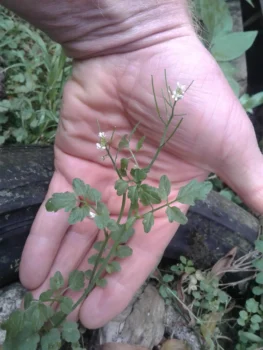
Woodland Bittercress: A Delicate Spring Wildflower for Shade Gardens
If you’re looking for an early-blooming groundcover that thrives in shady spots, woodland bittercress (Cardamine flexuosa) might catch your eye. This delicate little plant produces charming white flowers just when your garden is waking up from winter’s slumber, but there’s more to this story than meets the eye.
What is Woodland Bittercress?
Woodland bittercress is a small herbaceous plant that can live as an annual, biennial, or perennial depending on conditions. As a forb, it lacks woody stems and instead produces soft, green growth that dies back to ground level. The plant forms low rosettes of compound leaves and sends up delicate stems topped with tiny white, four-petaled flowers in early spring.
You might also find this plant listed under its synonyms Cardamine hirsuta ssp. flexuosa or Cardamine konaensis in some references, though these names are less commonly used today.
Where Does It Grow?
Here’s where things get interesting: woodland bittercress isn’t actually native to North America. Originally from Europe and western Asia, this little traveler has made itself at home across much of the continent. You can find it established in states from Alabama to Washington, and it’s also present in parts of Canada and Puerto Rico.
- Species observed
- No observations
Garden Appeal and Growing Habits
Woodland bittercress has a quiet charm that appeals to gardeners who appreciate subtle beauty. Its small white flowers appear in early spring, providing nectar for small pollinators like flies and tiny bees when few other food sources are available. The plant typically stays low to the ground, making it useful as a groundcover in shaded areas.
However, this plant comes with a significant caveat: it’s an enthusiastic self-seeder. While this trait can be useful for filling in bare spots quickly, it can also mean woodland bittercress pops up where you don’t want it.
Growing Conditions and Care
If you decide to work with woodland bittercress, here’s what it prefers:
- Light: Partial to full shade
- Soil: Moist, well-drained soil
- Water: Consistent moisture but not waterlogged conditions
- Hardiness: Zones 3-9
- Temperature: Cool, temperate conditions
The plant’s wetland status varies by region – it can adapt to both wetland and upland conditions, though it typically prefers non-wetland sites in most areas.
Should You Plant Woodland Bittercress?
This is where gardeners need to weigh the pros and cons carefully. On the positive side, woodland bittercress:
- Provides early spring interest when little else is blooming
- Thrives in challenging shady, moist spots
- Requires minimal care once established
- Offers nectar for early-season pollinators
However, as a non-native species that readily self-seeds, it may not be the best choice for every garden. While it’s not classified as invasive, its aggressive spreading habit could potentially crowd out native plants over time.
Native Alternatives to Consider
If you love the idea of early spring flowers and groundcover for shade but want to support local ecosystems, consider these native alternatives:
- Wild ginger (Asarum canadense) for groundcover
- Bloodroot (Sanguinaria canadensis) for early white flowers
- Spring beauty (Claytonia virginica) for delicate spring blooms
- Toothwort species (Cardamine concatenata) – a native cousin with similar flowers
The Bottom Line
Woodland bittercress can be a useful plant for specific situations – particularly challenging shady spots where you need quick coverage and don’t mind a somewhat informal, naturalized look. However, given its non-native status and vigorous self-seeding nature, most gardeners would benefit more from choosing native alternatives that provide similar benefits while supporting local wildlife and plant communities.
If you already have woodland bittercress in your garden, deadheading spent flowers before they set seed can help prevent excessive spread while still allowing you to enjoy those charming early spring blooms.