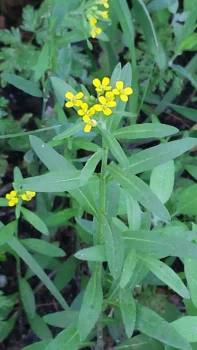
Wormseed Wallflower: A Hardy Pioneer Plant for Challenging Garden Spots
If you’re looking for a tough, no-fuss plant that can handle less-than-perfect growing conditions, wormseed wallflower (Erysimum cheiranthoides) might catch your attention. This scrappy little annual or biennial has made itself at home across North America, though it originally hails from Europe and Asia.
What Is Wormseed Wallflower?
Wormseed wallflower is a member of the mustard family that grows as a forb—essentially an herbaceous flowering plant without woody stems. Despite its somewhat unflattering common name, this plant produces clusters of small, cheerful yellow flowers that can brighten up forgotten corners of your garden.
You might also see this plant listed under its scientific synonyms Cheirinia cheiranthoides or Erysimum cheiranthoides ssp. altum in some older reference materials.
Where Does It Grow?
This adaptable plant has spread far and wide across North America since its introduction. You can find wormseed wallflower growing in all U.S. states, Canadian provinces, and even up into Alaska and the northern territories. It’s particularly common in disturbed soils, roadsides, and areas where other plants struggle to establish.
- Species observed
- No observations
The plant thrives in USDA hardiness zones 2-9, making it one of the more cold-hardy options for northern gardeners.
Should You Plant Wormseed Wallflower?
Here’s where things get interesting. While wormseed wallflower isn’t considered invasive or noxious, it is a non-native species that has naturalized throughout North America. Whether you choose to include it in your garden depends on your gardening philosophy and goals.
Reasons You Might Want to Grow It:
- Extremely hardy and tolerates poor, disturbed soils
- Provides nectar and pollen for small bees, flies, and butterflies
- Self-seeding nature means minimal effort once established
- Good pioneer plant for challenging sites
- Grows well in full sun to partial shade
Reasons You Might Skip It:
- Non-native origin means it doesn’t support native ecosystems as well as indigenous plants
- Can self-seed aggressively in disturbed areas
- Relatively short blooming period
- Limited aesthetic appeal compared to showier alternatives
Native Alternatives to Consider
If you’re leaning toward supporting native plant communities, consider these indigenous alternatives that offer similar benefits:
- Wild bergamot (Monarda fistulosa) – attracts pollinators and tolerates poor soils
- Black-eyed Susan (Rudbeckia hirta) – hardy, drought-tolerant, and supports native wildlife
- Prairie sunflower (Helianthus petiolaris) – excellent for disturbed sites and pollinator gardens
Growing Wormseed Wallflower Successfully
If you decide to grow wormseed wallflower, you’ll find it refreshingly low-maintenance. This plant actually prefers challenging conditions and can struggle in overly rich, well-amended soils.
Planting Tips:
- Direct sow seeds in fall or early spring
- Scatter seeds on disturbed or bare soil
- No need to cover seeds deeply—light is helpful for germination
- Works well in gravel paths, rock gardens, or naturalized areas
Care Requirements:
- Minimal watering once established—drought tolerant
- No fertilization needed (may actually harm the plant)
- Allow plants to self-seed if you want them to return
- Thrives in neglected areas where other plants fail
Understanding Its Habitat Preferences
One interesting aspect of wormseed wallflower is how its relationship with water varies by region. In places like Alaska and coastal areas, it’s considered an upland plant that almost never appears in wet areas. However, in regions like the Eastern Mountains and Great Plains, it shows more flexibility and can occasionally tolerate wetter conditions.
The Bottom Line
Wormseed wallflower is a survivor—a plant that thrives where others give up. While it may not be the star of your flower border, it serves a valuable role in challenging garden situations and provides modest benefits to pollinators. Whether you choose to welcome this scrappy immigrant into your garden or opt for native alternatives is ultimately a personal decision based on your gardening goals and environmental values.
If you do decide to grow it, you’ll appreciate its no-nonsense attitude and ability to add a splash of yellow to the toughest garden spots with virtually no effort on your part.