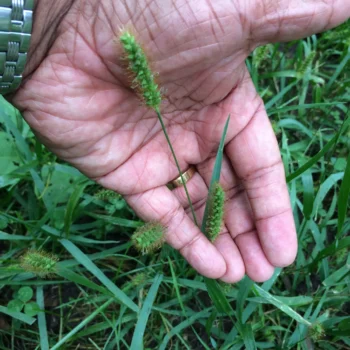
Yellow Foxtail: The Weedy Grass You Don’t Want in Your Garden
If you’ve ever noticed a bristly, yellowish grass sprouting up uninvited in your garden beds or lawn edges, you’ve likely encountered yellow foxtail (Setaria pumila). Also known as pigeon grass or yellow bristlegrass, this annual grass is one of those plants that shows up whether you want it or not—and trust us, you probably don’t want it.
What is Yellow Foxtail?
Yellow foxtail is a non-native annual grass that originally hails from Europe and Asia but has made itself quite at home across North America. This adaptable little troublemaker belongs to the grass family and has the remarkable ability to pop up just about anywhere, from disturbed soils to garden beds to the edges of walkways.
The plant gets its common name from its distinctive seed heads, which bear a striking resemblance to a fox’s bushy tail. These bristly, yellowish-brown seed heads appear in summer and fall, making the plant quite recognizable once you know what to look for.
Where You’ll Find Yellow Foxtail
This persistent grass has spread far and wide across North America, establishing populations in all U.S. states, most Canadian provinces, and even reaching Hawaii and various Pacific territories. From Alberta to Alabama, from coast to coast, yellow foxtail has proven remarkably successful at colonizing new territories.
- Species observed
- No observations
Plant Characteristics
Yellow foxtail is a relatively small grass, typically reaching about 3 feet in height when fully mature. Here are its key features:
- Annual growth habit with rapid growth rate
- Fine-textured green foliage
- Distinctive bristly seed heads that turn brown at maturity
- Bunch-type growth form with erect orientation
- Active growing period during spring and summer
Why Yellow Foxtail Isn’t Garden-Worthy
While yellow foxtail might seem harmless enough, there are several reasons why you probably don’t want to encourage it in your landscape:
- Limited aesthetic value: Unlike ornamental grasses, yellow foxtail lacks the visual appeal that makes a plant garden-worthy
- Aggressive seeder: With up to 200,000 seeds per pound and high seed production, it can quickly overwhelm more desirable plants
- Weedy nature: It tends to pop up in disturbed areas and can compete with your intentionally planted flowers and vegetables
- Minimal wildlife benefits: As a wind-pollinated grass, it offers little to pollinators, and its wildlife value is limited
Growing Conditions and Adaptability
Part of what makes yellow foxtail so successful (and potentially problematic) is its adaptability to various growing conditions:
- Soil preferences: Adapts well to medium and fine-textured soils
- pH tolerance: Grows in soils with pH ranging from 5.0 to 7.0
- Water needs: Low moisture requirements and low drought tolerance
- Sun exposure: Intolerant of shade, preferring full sun locations
- Temperature range: Requires minimum temperatures of 52°F and at least 110 frost-free days
The plant’s wetland status varies by region, but it generally shows facultative behavior—meaning it can grow in both wet and dry conditions, making it even more adaptable.
Better Native Alternatives
Instead of letting yellow foxtail take over your garden spaces, consider these native grass alternatives that offer better aesthetic and ecological value:
- Little bluestem (Schizachyrium scoparium) – A beautiful native bunch grass with striking fall color
- Buffalo grass (Poaceae family natives) – For lawn alternatives in appropriate regions
- Native sedges – Provide similar texture but with greater wildlife benefits
- Regional native grasses – Check with your local native plant society for the best options in your area
Managing Yellow Foxtail
If yellow foxtail has already established itself in your garden, here are some management strategies:
- Hand-pull young plants before they set seed
- Maintain healthy, dense plantings of desirable species to reduce available niches
- Mulch garden beds to suppress germination
- Regular cultivation can help, but be aware that this grass thrives in disturbed soils
The Bottom Line
While yellow foxtail is an interesting example of plant adaptability and success, it’s not a species that most gardeners want to actively encourage. Its weedy nature, limited aesthetic appeal, and tendency to self-sow abundantly make it more of a garden challenge than an asset. Instead, focus your energy on native grasses and other plants that will provide better long-term value for both your landscape and local wildlife.
Remember, the best defense against weedy species like yellow foxtail is a healthy, well-established garden ecosystem filled with plants that belong in your region. When native plants are thriving, there’s simply less room for the uninvited guests to move in and make themselves at home.