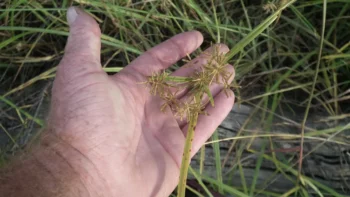
Yellow Nutsedge: The Persistent Weed You Don’t Want in Your Garden
If you’ve ever battled a stubborn, grass-like plant that keeps coming back no matter how many times you pull it, you might be dealing with yellow nutsedge (Cyperus esculentus). This perennial sedge has earned quite the reputation among gardeners – and not in a good way. While it might look innocent enough, this non-native plant can quickly become your garden’s most unwelcome guest.
What Exactly is Yellow Nutsedge?
Yellow nutsedge is a grass-like perennial that belongs to the sedge family (Cyperaceae). Despite its common name, it’s not actually a true grass, though it certainly masquerades as one with its slender green leaves and triangular stems. The plant produces small, inconspicuous green flowers and can reach about 0.7 feet in height.
One key identifying feature? Remember the old gardener’s saying: sedges have edges. If you roll the stem between your fingers, you’ll feel its distinctive triangular shape – quite different from the round stems of true grasses.
Where Does Yellow Nutsedge Come From?
Originally native to Europe, Asia, and northern Africa, yellow nutsedge has made itself at home across North America as a non-native species. It now grows throughout most of the United States and parts of Canada, thriving everywhere from Alabama to British Columbia, and from coast to coast.
- Species observed
- No observations
The plant has established itself so thoroughly that it’s found in nearly every state, plus several Canadian provinces, Hawaii, Puerto Rico, and the U.S. Virgin Islands. Its adaptability is part of what makes it such a successful – and problematic – species.
Why Gardeners Should Think Twice
Here’s the thing about yellow nutsedge: it’s incredibly aggressive and difficult to control once established. This plant has a rapid growth rate and spreads through underground rhizomes, creating new plants faster than you can say weed whacker. Its vegetative spread rate is classified as rapid, meaning a small patch can quickly become a major problem.
The plant produces underground tubers (sometimes called nutlets) that can remain dormant in soil for years before sprouting. Even if you manage to remove all visible growth, these persistent little storage organs can give rise to new plants seasons later.
Growing Conditions and Hardiness
Yellow nutsedge is frustratingly adaptable, which explains its widespread distribution. It thrives in USDA hardiness zones 4-10 and tolerates a wide range of growing conditions:
- Soil types: Adapts to coarse, medium, and fine-textured soils
- pH range: 5.0 to 7.0
- Moisture: Prefers moist conditions but has medium drought tolerance
- Sun exposure: Intolerant of shade, preferring full sun locations
- Temperature: Can handle minimum temperatures down to 42°F
Wetland Status and Habitat Preferences
Across most regions, yellow nutsedge has a Facultative Wetland status, meaning it usually occurs in wetlands but can also establish in non-wetland areas. In some regions like the Atlantic and Gulf Coastal Plain and Western Mountains, it’s classified as Facultative, indicating it’s equally comfortable in wet or dry conditions.
This flexibility in habitat preferences is another reason why the plant can establish so successfully in diverse landscape settings.
Wildlife and Ecological Impact
While yellow nutsedge does provide some wildlife benefits, they’re relatively modest. The plant contributes only 2-5% of large animals’ diets and 5-10% for small mammals, water birds, and terrestrial birds. It provides sparse cover for wildlife compared to native alternatives.
Better Native Alternatives
Instead of battling yellow nutsedge or considering it for your landscape, why not choose native sedges that offer similar grass-like texture without the headaches? Consider these native alternatives:
- Native Carex species (sedges) that provide excellent wildlife habitat
- Native bunch grasses suited to your region
- Indigenous wetland plants if you’re looking to fill moist areas
Your local native plant society or extension office can recommend specific species that will thrive in your area while supporting local ecosystems.
The Bottom Line
Yellow nutsedge is one of those plants that proves the old saying just because you can doesn’t mean you should. While it’s readily available and incredibly easy to establish, its aggressive nature and non-native status make it a poor choice for intentional landscaping.
If you’re dealing with existing yellow nutsedge in your garden, focus on prevention, consistent removal, and establishing competitive native plants. And if you’re planning a new landscape? Skip the nutsedge entirely and choose native plants that will give you beauty without the battle.
Remember, the best gardens work with nature, not against it – and yellow nutsedge is definitely working against your gardening goals!